
If you do not follow Apple very closely, the name John Ternus probably meant nothing to you until yesterday. He never engaged in Twitter arguments, avoided media noise, and did not gather stadiums of fans. But starting September 1, 2026, he will lead a company worth $4 trillion — and will be responsible for every iPhone, MacBook, and AirPods released after that day.
In brief: who Ternus is
John Ternus is 51 years old. He has spent half of his life at Apple — exactly 25 years. He started by checking tiny screws on the production line of the Apple Cinema Display monitor, and today he is the person who was responsible for the hardware engineering of all the company’s key products: iPhone, Mac, iPad, AirPods, Apple Watch, and Vision Pro.
Ternus is the kind of case where a CEO is chosen not for the ability to speak well on camera, but for what he has actually built with his own hands. More precisely — with the mind of an engineer.
University, swimming, and the first career step
Pennsylvania and mechanical engineering
Ternus grew up in California and entered the University of Pennsylvania — one of the prestigious Ivy League universities. He studied mechanical engineering and at the same time competed for the university swimming team. In 1997, he received a bachelor’s degree in engineering.
His graduation project is revealing: he developed a mechanical feeding manipulator that people with quadriplegia could control using head movements. Not just a technical task — but a device that solved a real human problem. This logic — “technology in service of people” — runs through his entire later career.
First job: virtual reality headsets
Right after university, Ternus joined a small company called Virtual Research Systems, which developed VR headsets — long before this technology became mainstream. After working there for several years as a mechanical engineer, he moved to Apple in 2001.
25 years at Apple: from a tiny screw to the iPhone
The first year: counting grooves on a screw
Ternus’s first project at Apple was the Apple Cinema Display, a desktop monitor. He himself spoke about this experience in his commencement speech at the University of Pennsylvania in 2024.
“Somewhere in my first year on the job, I found myself at a supplier’s manufacturing facility. Far from home. Far past midnight. I was using a magnifying glass to count the number of grooves on the head of a screw. And I was arguing with the supplier because these parts had 35 grooves. They were supposed to have 25. I remember pausing for a moment and thinking: ‘What the hell am I doing here?’”
But that is exactly what Apple is: attention to details invisible to the end user. Ternus absorbed that from day one.
From VP to SVP: growth inside the company
In 2013, Ternus became Vice President of Hardware Engineering — under then-SVP Dan Riccio. When Riccio moved to the Vision Pro project in 2021, Ternus took his place, becoming Senior Vice President. At that moment, he was the youngest member of Apple’s executive team.
The products behind Ternus
The list of products Ternus worked on or led as SVP is, in effect, a review of Apple’s most important gadgets of the last decade:
- iPhone — generations from the first model to iPhone 17 and iPhone Air
- AirPods — from the launch of the first generation to the system with hearing-aid features
- iPad — new product lines, including iPad Pro
- Mac — the transition from Intel to Apple Silicon, MacBook Pro, iMac Pro, Mac Pro 2019
- Apple Watch — several generations, including health features
- Vision Pro — the mixed reality headset
- MacBook Neo — Apple’s new affordable laptop based on an iPhone chip, starting at $599
MacBook Neo is one of the freshest examples of Ternus’s approach: affordability without sacrificing quality. Apple had never before made a laptop cheaper than $1000. Ternus did it without lowering the “Apple quality” bar — through a non-standard solution using a chip from the iPhone.
What kind of person he is — beyond the press release
About Steve Jobs and the beauty of details
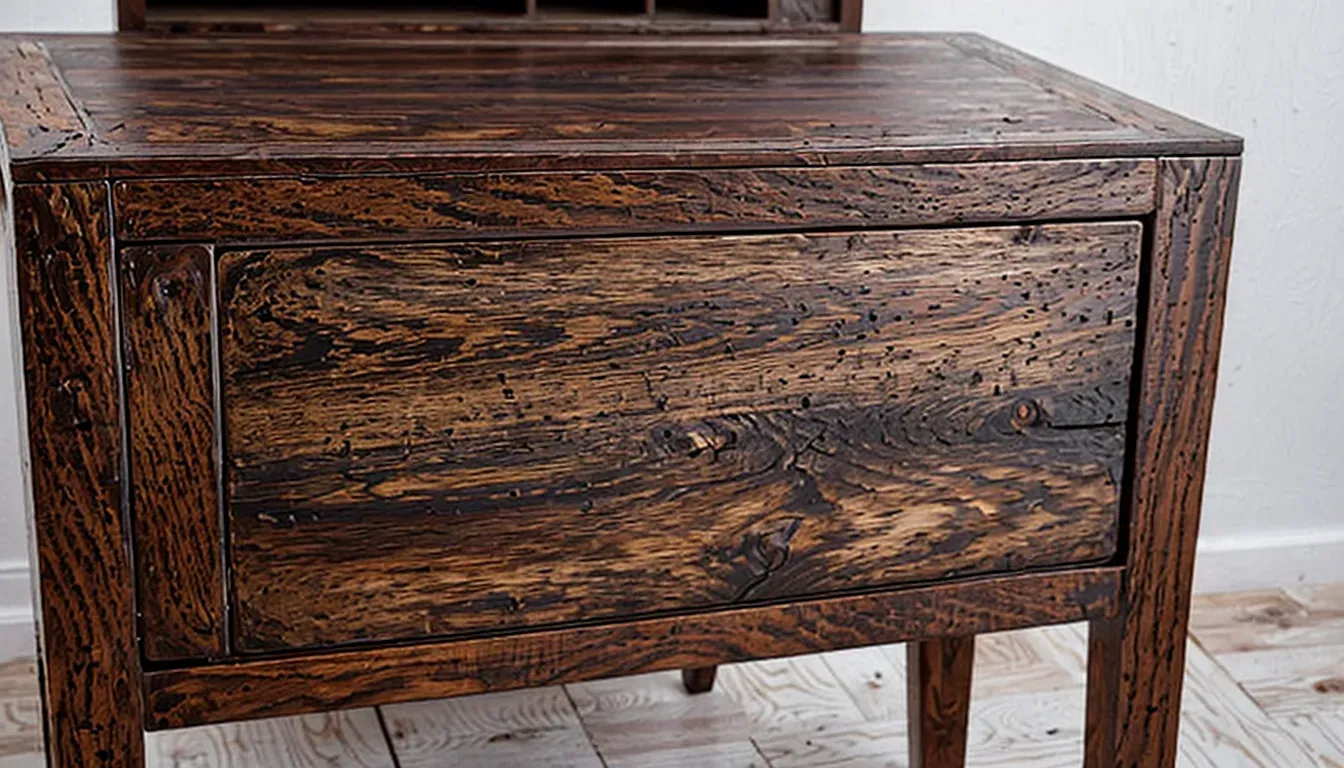
In one interview, Ternus was asked about his favorite memory of Steve Jobs. The answer was unexpected.
“He was moving furniture — a dresser — and pulled it away from the wall. He looked at the back panel and just reflected on the fact that the carpenter who made it had made that part just as beautiful as the rest. Even though no one would ever see it. I think about that all the time — because it perfectly captures what we do here.”
This quote explains more than any Apple press release: Ternus builds products as if someone will definitely look at the part no one sees.
[H3] Humility as a leadership trait
In his speech to graduates of the University of Pennsylvania, Ternus formulated his work principle this way: “Always assume you are just as smart as anyone else in the room. But never think you know as much as they do. With that mindset, you will find the confidence to move forward — and, more importantly, the humility to ask questions.”
In the technology industry, overflowing with demonstrative egos, Ternus is an exception. He does not run public social media accounts, avoids public disputes, and rarely appears in news headlines for personal reasons. Only through the products he creates.
The main question: what will happen with AI at Apple
Analyst Dan Ives of Wedbush Securities said it directly: “Cook leaves an important legacy in Cupertino, and there will be a lot of pressure on Ternus — especially on the AI front.”
That is fair. While competitors — Samsung, Google, Huawei — are actively pushing AI features to the forefront in their smartphones and laptops, Apple Intelligence is still perceived ambiguously by the market. Ternus is an engineer to the core. But the 2026 smartphone and laptop market demands not just good hardware, but a clear AI strategy.
The good news: it was Ternus who led Apple’s transition from Intel to its own Apple Silicon chips — one of the boldest technological decisions the company has made in recent years. That transition made MacBooks the most power-efficient laptops on the market and changed perceptions of what a laptop could be. If he is capable of such a strategic decision, there is reason to believe he is capable of the next one as well.
Ternus vs. Cook: different styles, one DNA

Tim Cook came to Apple as a master of operations and supply chains. He optimized, scaled, and diversified. His biggest victories are turning Apple Services into a $100 billion-a-year business and reaching a market capitalization of $4 trillion.
Ternus is a different type. He is a product engineer who thinks in terms of “how this works” and “why this feels right.” If Cook built the platform, then Ternus built what stands on that platform.
Is that good for Apple? Most analysts believe so. Especially now, when the gadget market once again needs a product breakthrough, not just operational excellence. iPhone Air, MacBook Neo, the next generation of AirPods — all of this is already in Ternus’s hands. The only question is what he will prepare next.
In brief: who John Ternus is
- 51 years old, 25 years at Apple
- Engineer by education (University of Pennsylvania, 1997)
- Started his Apple career with Apple Cinema Display in 2001
- Responsible for AirPods, iPhone, iPad, Mac, Apple Watch, Vision Pro, MacBook Neo
- SVP of Hardware Engineering since 2021, the youngest member of the executive team
- Apple CEO from September 1, 2026 — the eighth overall
- Has no public social media, known for humility and attention to detail
Article prepared by the TechVisor team — practical IT media for people.