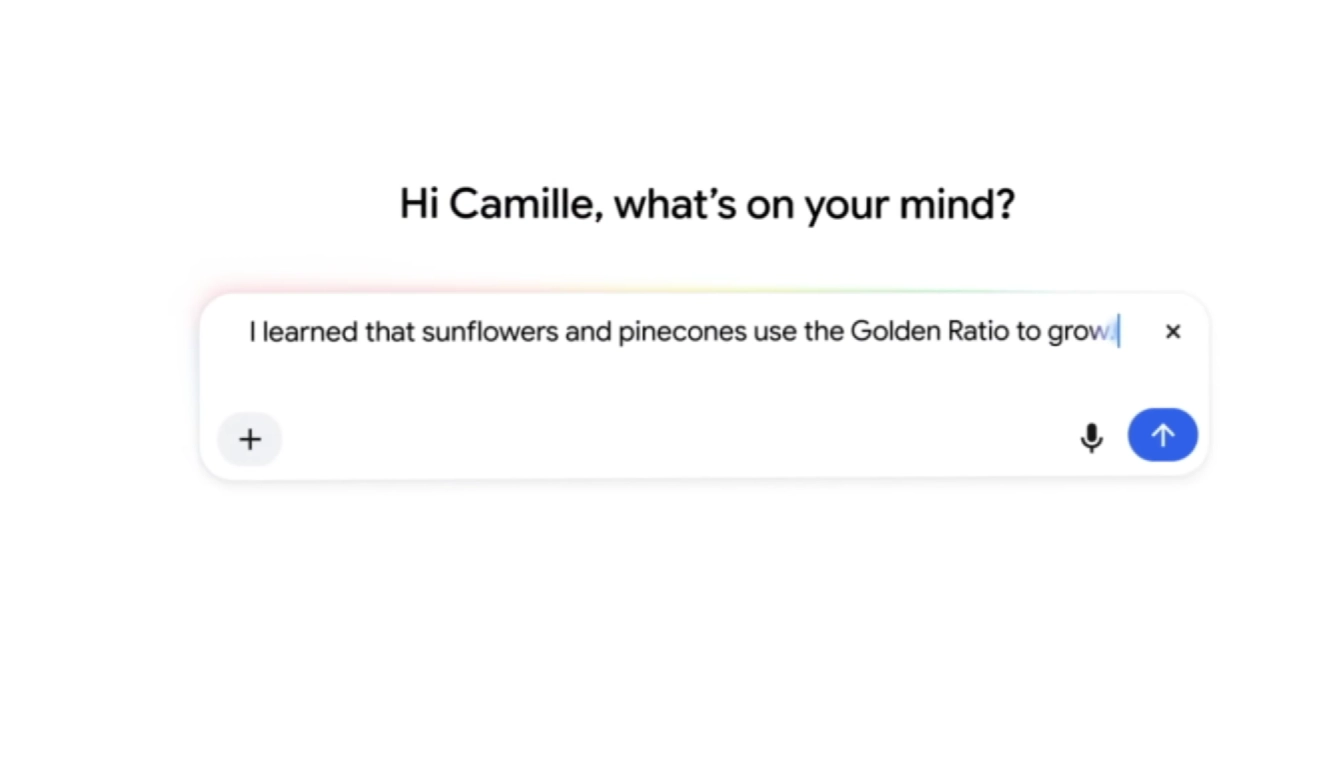

SEO promotion and artificial intelligence after I/O 2026 are no longer two separate topics that merely overlap. They are one inseparable process. Google has just announced the most radical change to search in 25 years: AI agents that independently monitor the internet, Generative UI that builds tools directly in search results, and a new role for Google not as a “guide to a website,” but as the “final destination.” For millions of website owners, bloggers, and businesses, this means one thing: the old logic of SEO no longer works the same way. Let’s break down what has changed and how to adapt.
What exactly changed in Google Search after I/O 2026
To understand the new rules of SEO, you first need to understand what Google changed. At I/O 2026, the company announced several key updates that directly affect organic traffic.
AI Mode with one billion users. The artificial-intelligence-based search mode — AI Mode — already serves one billion monthly users. Queries in it double every quarter. This means that every second complex search query is potentially processed with an answer generated directly inside Google, without a visit to a website.
Information agents 24/7. Google has launched “information agents” — AI systems that monitor topics in the background and proactively notify the user. This fundamentally changes the behavioral model: a person no longer goes to Google every time to “check” something — the agent brings the updates by itself.
Generative UI. Google can now generate interactive tables, calculators, and mini-apps directly in the answer to a query. Comparing tariffs, calculating costs — all of this can be done without leaving Google.
Practical conclusion: some queries that previously drove traffic to informational websites are now “closed” directly inside Google. For SEO specialists, this is the most important contextual fact of 2026.
The death of “informational traffic” — and what appears instead

Informational traffic has always been the foundation of most content websites: articles about “what it is,” “how to choose,” and “comparison of X and Y” consistently brought in readers. Now this model is collapsing — and understanding exactly why, and what appears in its place, is the key to the new SEO.
Why informational queries were hit the hardest
Back in 2025, Semrush data across more than 10 million keywords recorded that Google AI Overviews had “absorbed” a significant share of informational queries. If articles like “what is artificial intelligence” or “how to choose a laptop” used to bring stable traffic, Google now generates a short answer directly in the search results.
After I/O 2026, this trend intensified. Generative UI automatically intercepts queries such as “compare X and Y,” “calculate Z,” “show me a list of the best…” — and processes them in Google’s own interface.
What comes instead
The traffic that remains is more valuable. Users who still click through to a website in 2026 do so consciously: they are looking for something Google did not provide in the results. This means:
- A more qualified audience
- Higher readiness to convert
- Fewer “bounces” from people who came and left
SEO in 2026 is not a race for traffic volume, but a fight for the quality of the audience that remains.
New success metrics in SEO promotion
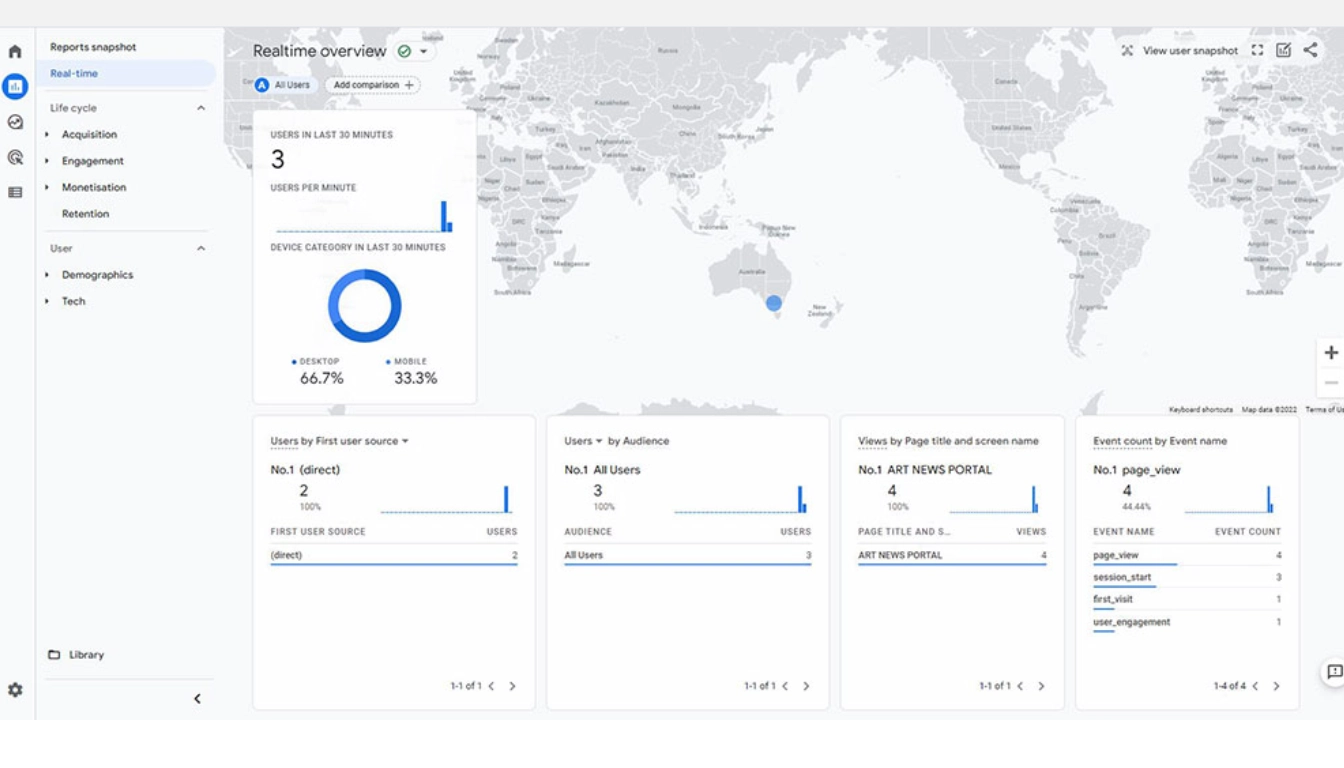
Traditional SEO measured success by rankings and the number of clicks. These metrics have not disappeared, but they are no longer the only and main ones. What is now important to measure:
| Old metric | New metric | Why it is more important |
|---|---|---|
| Position in the top 10 | Mentions in AI Overviews | Google cites sources in its AI answers |
| Number of clicks | Brand queries | If people search specifically for you, you win |
| CTR in search results | Post-click engagement | Time on page, conversions, repeat visits |
| Number of articles | Depth of unique content | AI cannot replace the author’s real experience |
| Search traffic | AI citations | Whether Gemini/ChatGPT refers to your website |
What “good content” means now — and why AI changed the rules
The definition of “quality content” in Google’s algorithms has fundamentally changed after the mass spread of AI-generated texts. If earlier a well-structured article with properly placed keywords could rank, Google has now learned to distinguish real author experience from synthesized text — and ranks them differently.
Google is looking for what AI cannot replace
Google itself acknowledges this: in recent years, the web has been flooded with thousands of similar AI-generated articles. To filter them out, algorithms have learned to recognize:
- EEAT (Experience, Expertise, Authoritativeness, Trustworthiness) — Google explicitly ranks content from authors with real experience
- Unique data and perspectives — original research, case studies, author analysis
- Primary-source value — journalism and reporting where primary information is present
- Practical examples — not “how this is done in theory,” but “this is how we did it and what happened”
What no longer works
- Mass informational articles without a unique perspective (“What is X — explanation”)
- Content fully written by AI without author editing and experience
- Articles of 500–800 words that provide a superficial answer to a question
- Keyword stuffing without real depth on the topic
GEO is the new SEO: optimization for generative search
In 2026, SEO has finally transformed into a new discipline — GEO (Generative Engine Optimization), or, in a narrower sense, AEO (Answer Engine Optimization). The idea is simple: optimization is now aimed not at Google search result lines, but at making an AI system choose your website as the source for forming its answer. Those who do not adapt to GEO will gradually lose visibility — even if they still have good positions in the classic search results, which, in fact, almost no longer exist.
What AEO is and how it works
If traditional SEO helped a website appear on the first page of Google, AEO helps a website be cited in an AI answer. The difference is fundamental: in Gemini or ChatGPT Search, there is no “results page” — there is only one answer with several source links.
To appear among these sources, content must meet several criteria:
- FAQ-oriented structure — questions and clear answers that AI can easily extract
- Semantic accuracy — no ambiguity in statements
- Domain authority — AI cites sources that Google trusts
- Freshness — a recent update date and current data
- Schema markup — structured data that helps AI correctly interpret content
Practical example
A TechVisor article with a clear “What is artificial intelligence” structure, with the answer in the first paragraph and an FAQ block, is a potential source for AI Overviews and Gemini. An article without this structure is not.
Technical SEO becomes more important, not less important
The paradox: in the era of AI-generated content, technical optimization has become more valuable. The reason is simple: AI search systems rank websites not only by content, but also by how easily they can “read” your structure.
What is critically important in 2026:
- Core Web Vitals — loading speed, interactivity, layout stability
- Structured data (schema.org) — Article, FAQPage, HowTo, Product — everything that helps AI correctly categorize content
- Internal linking — helps AI understand semantic connections between materials
- Mobile-first — most queries in 2026 come from mobile devices
- HTTPS and security — a basic condition for any indexing
How the role of the SEO specialist is changing
For SEO specialists, I/O 2026 is not a reason to panic, but a signal to rethink their own value. Some routine tasks that used to take up most working time are gradually being automated or losing their meaning. Instead, demand is growing for skills that algorithms still cannot replace.
What is leaving the SEO specialist’s work
- Mechanical keyword selection and placement in text
- Writing template-based “SEO texts” without editorial value
- Artificial manipulation of behavioral factors
- Building a link profile through directories and spam methods
What comes instead
- Content strategy — a deep understanding of which topics AI really cannot cover
- AEO optimization — structuring content for citation in AI answers
- Brand building — growth of brand queries as a trust signal for Google and AI
- New-type analytics — tracking AI citations, not only rankings
- Technical optimization — schema, Core Web Vitals, structure
The SEO specialist of 2026 is no longer “a person who inserts keywords into texts.” This is a content strategist and analyst who understands both search algorithms and AI behavior.
Zero-Click and direct traffic: how to keep an audience without Google
The classic results page with “10 blue links” is effectively disappearing. Instead, Google forms a custom AI answer that immediately moves the user into a conversational mode. This means a growing share of Zero-Click sessions — when a person receives the answer in search and goes nowhere else.
For websites that depended on informational traffic, this is a structural problem. But there is a solution.
Direct traffic as a new point of support
Direct traffic — direct visits from a loyal audience — is becoming one of the most important sources of traffic, and for some niches the only reliable one. People who already know your brand deliberately visit the website without an intermediary in the form of search.
What this means in practice: the main task of an SEO specialist in 2026 is not only to get into the top of the search results, but also to make the website an authoritative source that an AI agent chooses to form its answer. And, in parallel, to build direct communication channels with the audience.
Owned platforms and closed channels are the new diversification
If Google stops being a reliable supplier of traffic, the answer is diversification:
- Email newsletters — an audience no algorithm can take away
- Telegram channel — direct communication without algorithmic filtering
- Closed communities — Discord, Slack, closed groups with loyal readers
- Push notifications — subscribers who will return regardless of search
This is not a rejection of SEO — it is insurance. Brands that develop their own channels in parallel with search optimization will have much more resilient traffic in 2026–2027.
If you have a website, blog, or media outlet, here is a specific adaptation plan:
Content audit. Review which of your articles had the biggest traffic drop in 2025–2026. Most likely, these are purely informational materials without unique data.
Add EEAT signals. Every article should have a visible author with a real background, an update date, and links to primary sources.
Structure for FAQ and AI. Start articles with a direct answer to the question. Add an FAQ section. Use FAQPage schema.
Focus on unique content. Cases, research, author analysis, comparisons based on real testing — everything AI cannot synthesize on its own.
Track AI citations. Check whether your website appears as a source in Google AI Overviews and ChatGPT Search. This is a new indicator of authority.
In short: the new rules of SEO promotion and artificial intelligence in 2026
- SEO promotion and artificial intelligence are now a single inseparable discipline called GEO
- The classic “10 blue links” results page is disappearing — it is being replaced by an AI answer in conversational mode
- Zero-Click sessions are growing: users get the answer in Google and do not go anywhere
- GEO (Generative Engine Optimization) is the new goal: to be the source AI chooses for its answer
- EEAT and unique content are the only things AI cannot replace; rewriting other people’s articles is dead
- Technical SEO and schema markup are increasing in value for correct interpretation by LLM models
- Direct traffic becomes critical: newsletters, Telegram, closed communities — the new diversification
- The SEO specialist of 2026 turns a website into an authoritative source for AI, rather than simply optimizing it for keywords
The article was prepared by the TechVisor team — a practical IT media outlet for people.