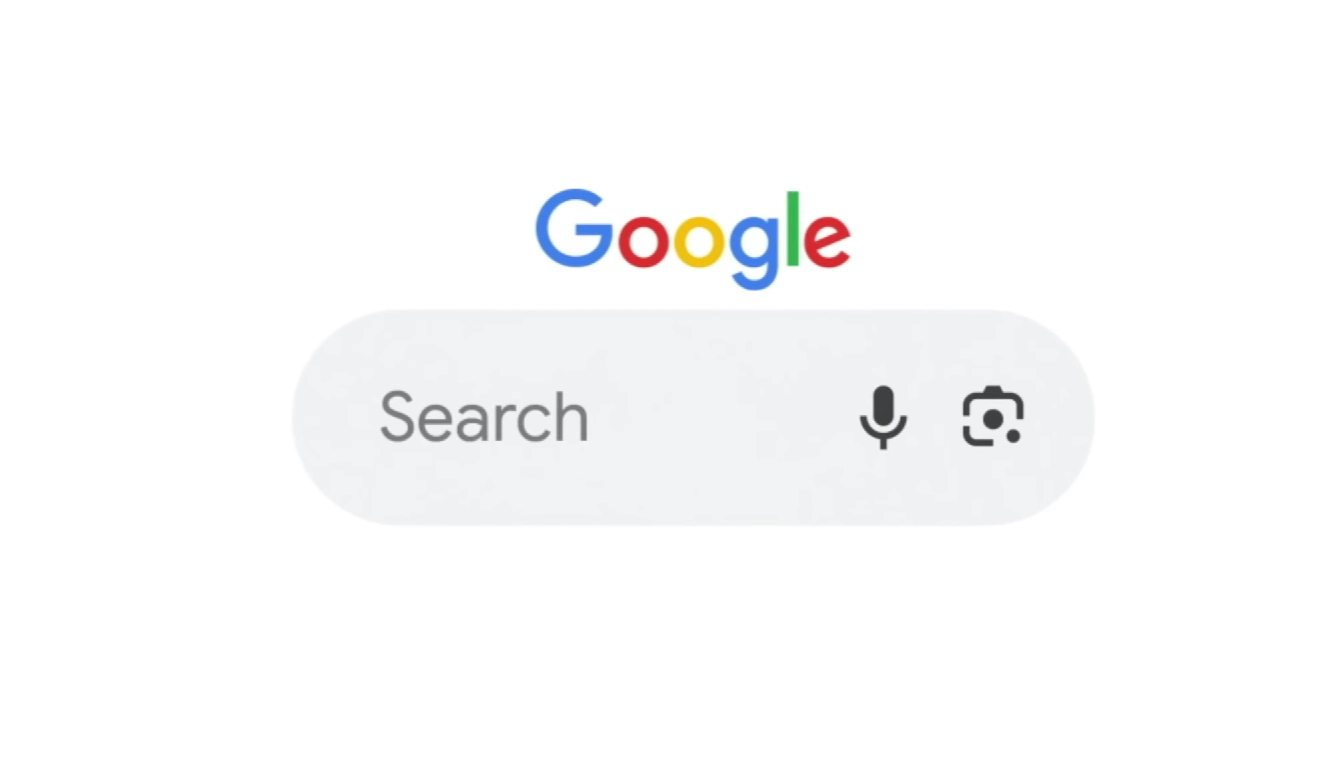

Google Search and artificial intelligence have finally merged into one. On May 19, 2026, at Google I/O, the company announced the most radical reimagining of search in 25 years: a new intelligent search bar, AI agents monitoring the internet in the background 24/7, and Gemini 3.5 Flash as the default model for everyone. The empty white rectangle with a blinking cursor — the one that has opened Google unchanged since 1998 — is no longer the main interface element. A new era begins.
AI Mode reached one billion users — and queries keep growing
Before talking about the future, Google shared numbers that explain the full context of the announcements. AI Mode — the AI-based search mode — reached one billion monthly users just one year after launch. Queries in this mode are doubling every quarter.
This is not just a marketing signal. It is proof that users want more from search: not just links, but answers, context, analysis. Google responded with a sweeping reimagining of what “search” even means.
The new intelligent search bar: the biggest update in 25 years
The empty rectangle with a blinking cursor—the symbol of Google Search since 1998—has undergone the most radical redesign in its history. The new search bar no longer simply “waits for keywords”: it adapts, offers suggestions, and understands you even before you’ve finished formulating your query.
What changed in the search bar itself
Google called the new query field “the biggest update to the search bar in over 25 years.” Here is what it can do now:
- Dynamically expands — the bar adapts to the volume of your query, giving room for a detailed description
- Suggestions that go beyond autocomplete — the system offers not just word completions, but query formulations based on your intent
- Multimodal input — you can search using text, images, files, video, or even open Chrome tabs
Gemini 3.5 Flash as the default model for everyone
Starting May 19, 2026, Google updated AI Mode by connecting Gemini 3.5 Flash as the new base model for all users globally. According to Google, this is “the latest Flash model, delivering consistent frontier performance for AI agents and coding.”
Gemini 3.5 Flash sits between Gemini 3.5 Pro and the lighter Gemini Flash: powerful enough for complex tasks and fast enough for real-time responses.
Information agents: search that monitors the world on its own

This is arguably the most significant new feature at I/O 2026 for the general public. Instead of having to go to Google every time to search for the same topic, Google Search now tracks it in the background and brings you updates. The search logic is shifting from reactive to proactive..
What information agents are
Information agents work in the background 24/7, tracking blogs, news sites, social networks, and real-time data — finance, shopping, sports — and notifying the user when something changes.
Imagine: you are interested in a particular topic — say, the price of a specific laptop, news about your favorite club, or updates in a certain industry. Previously you had to open search every time and check manually. Now the agent does it on its own — and notifies you only when something truly important happens.
Google described this as “Google Alerts from 2003, but rebuilt on a frontier language model with the ability to draw nuanced conclusions.”
How to create your own agent
Users can create, configure, and manage multiple AI agents to track topics they care about. The process is as simple as possible: just describe the task in plain language — for example, “monitor news about Claude AI and notify me of significant updates” — and the agent launches.
Who has access and when
Information agents are launching first for Google AI Pro and Ultra subscribers this summer. The feature will gradually expand to a broader audience after that.
Generative UI and mini-apps: search builds tools on the fly

Another major announcement is Generative UI. Google Search can now not only answer questions but also build interactive tools directly inside the response to a query.
Generative UI builds custom tools right at the moment of response, and users can create mini-apps using plain language.
A practical example: ask “compare mobile internet plans in Ukraine” — and instead of a list of links you get an interactive table where you can filter by price, data volume, and carrier. Right inside Google.
Or: “Build me a calculator for estimating the cost of charging an electric car” — and Search will generate a simple tool you can use instantly, without installing any app.
Expanded agentic booking
Google is also expanding agentic booking capabilities in Search to a wide range of new tasks, including local services and experiences.
This means: instead of “find a restaurant → go to the website → book a table,” Google Search will be able to make the booking on its own — directly from the search interface, without visiting third-party sites.
The same applies to tickets, services, and appointments with specialists. Search is transforming into an action agent, not just an information agent.
What this means for publishers and website owners

The shift carries significant consequences for publishers and the broader web ecosystem. If Google’s AI can synthesize information, build interactive tools, and send background agents to monitor changes — the incentive for users to click through to source websites diminishes. Referral traffic from Google Search had already been falling as AI Overviews expanded, and the new features will likely accelerate that trend. The European Union has already taken notice.
For website, blog, and media owners — this is a serious shift in the logic of traffic. If Google used to bring the reader to the content, it now synthesizes the content without a click-through. Traditional SEO is no longer the only metric — the central question becomes whether there is any reason for Google to show a link to your resource at all.
Google Search AI 2026 vs ChatGPT Search: who wins

Google Search’s transformation into an AI platform is a direct response to ChatGPT Search and Perplexity AI, which have been actively drawing audiences away from traditional search.
Google’s main advantages:
- Scale and index: Google indexes significantly more of the web than any competitor
- Real time: agents with access to live data — finance, news, sports
- Integration: Chrome, Android, Workspace, Gmail — all within one ecosystem
ChatGPT Search’s main advantages:
- Less dependence on an advertising model
- Greater privacy in its approach to search queries
In brief: the key points on Google Search AI at I/O 2026
- Next-generation Google Search AI: Gemini 3.5 Flash as the standard for everyone
- New search bar — the biggest update in 25 years, multimodal input
- Information agents — 24/7 topic monitoring, change notifications
- Generative UI — search builds interactive tools and mini-apps on request
- Agentic booking — ordering services directly from Google without visiting third-party sites
- AI Mode: 1 billion monthly users, queries doubling every quarter
- Risk for publishers: fewer clicks to websites, more answers delivered directly inside Google
Article prepared by the TechVisor team — a practical IT media for people.