
When Netflix recommends a show, your bank blocks a suspicious transaction, and your smartphone recognizes your face — behind all of this is machine learning. A technology that has changed the world, yet most people know only general words about it.
In this article we’ll explain what machine learning is in plain language — no complex formulas, just real examples. After reading, you’ll understand how it works and where you encounter it every day.
What Is Machine Learning — Definition
Machine learning (ML) is a branch of artificial intelligence that allows computer systems to learn from data and improve their performance without explicit programming.
Sounds complicated? Here’s a simpler way to think about it:
A regular program executes precisely defined commands. Written as “if the button is pressed — perform an action.” Machine learning is different: the computer learns patterns from large amounts of data and makes decisions on its own based on that experience.
Imagine teaching a child to recognize cats. You show thousands of photos and say: “This is a cat” or “This is not a cat.” After enough examples, the child starts recognizing cats in new photos on their own. Machine learning works exactly the same way — only instead of a child it’s a computer, and instead of photos it’s billions of data points.
In short: machine learning is when a computer learns from examples, not from rules.
Machine Learning and Artificial Intelligence — What’s the Difference
These terms are often confused. Here’s a clear explanation:
Artificial Intelligence (AI) — a broad field of computer science that studies the creation of intelligent systems. It’s the general concept.
Machine Learning — a subfield of artificial intelligence. One of the ways to achieve “intelligence” — through learning from data.
Deep Learning — a subfield of machine learning that uses artificial neural networks with many layers.
Think of it like nesting dolls: AI contains ML, ML contains Deep Learning. Machine learning and artificial intelligence are not synonyms, but closely related concepts.
ChatGPT, Claude AI, Gemini — these are products built on deep learning, which is part of machine learning.
How Machine Learning Works — Step by Step

Step 1 — Data Collection
Everything starts with data. The more and better the data — the more accurate the model. To filter spam you need thousands of examples of spam and normal emails. To forecast weather — years of meteorological observations.
Step 2 — Data Preparation
Raw data is rarely perfect. It’s cleaned of errors, missing values are filled in, and it’s transformed into a format suitable for algorithms. This takes up to 80% of the time in real projects.
Step 3 — Model Training
The algorithm “looks” at the data, searches for patterns, and builds a mathematical model. For example: “if an email contains the words ‘win’, ‘money’, ‘free’ — the probability of spam is 94%.”
Step 4 — Testing and Evaluation
The model is tested on new data it hasn’t seen during training. Accuracy is measured: how many times it correctly identified spam, and how many times it made a mistake.
Step 5 — Improvement and Deployment
Based on test results, the model is tuned, improved, and put into production. But learning doesn’t stop — the model continues to improve on new data.
Types of Machine Learning
Supervised Learning
The most common type. The algorithm learns on labeled data — where each example has a correct answer.
Examples:
- Spam filter: thousands of emails labeled “spam” / “not spam”
- Image recognition: millions of photos with captions
- Real estate price prediction: property data + actual prices
Algorithms: linear regression, decision trees, support vector machines.
Unsupervised Learning
The algorithm works with unlabeled data — without ready-made answers. Its task is to find hidden structures and patterns on its own.
Examples:
- Customer segmentation: grouping buyers by behavior
- Transaction anomalies: finding suspicious operations without examples of fraud
- Recommendations: “people with similar tastes also watched…”
Algorithms: k-means clustering, autoencoders.
Reinforcement Learning
The algorithm learns through interaction with an environment — receiving a reward for correct actions and a penalty for incorrect ones. Like training an animal.
Examples:
- Training a game AI: Google’s AlphaGo learned to play Go better than world champions
- Tesla Autopilot: millions of kilometers of simulation and real driving
- Trading algorithms: optimizing strategies on financial markets
Where We Encounter Machine Learning Every Day

Machine learning is not an abstraction. Here are specific examples from your day:
🌅 In the morning Your smartphone unlocks with face recognition — that’s ML. The facial recognition algorithm was trained on millions of photos.
📧 At work Gmail automatically sorts your mail — spam goes to the spam folder, important messages to your inbox. Behind this is a classifier based on machine learning.
🎵 In your free time Spotify picks a playlist to match your mood. Netflix recommends a show you’ll definitely watch. YouTube knows what video is coming next.
🛒 When shopping Amazon and other retailers show products you’re interested in. Not by accident — ML analyzes your behavior and predicts your desires.
💳 At the bank Your card isn’t blocked even though you just made a purchase in an unfamiliar city. ML analyzed your usual transactions and decided this is normal. Or conversely — it blocked a suspicious operation.
🚗 On the road Google Maps predicts traffic jams and suggests a detour. Tesla’s Autopilot systems make decisions every second.
Neural Networks and Deep Learning — How They’re Connected
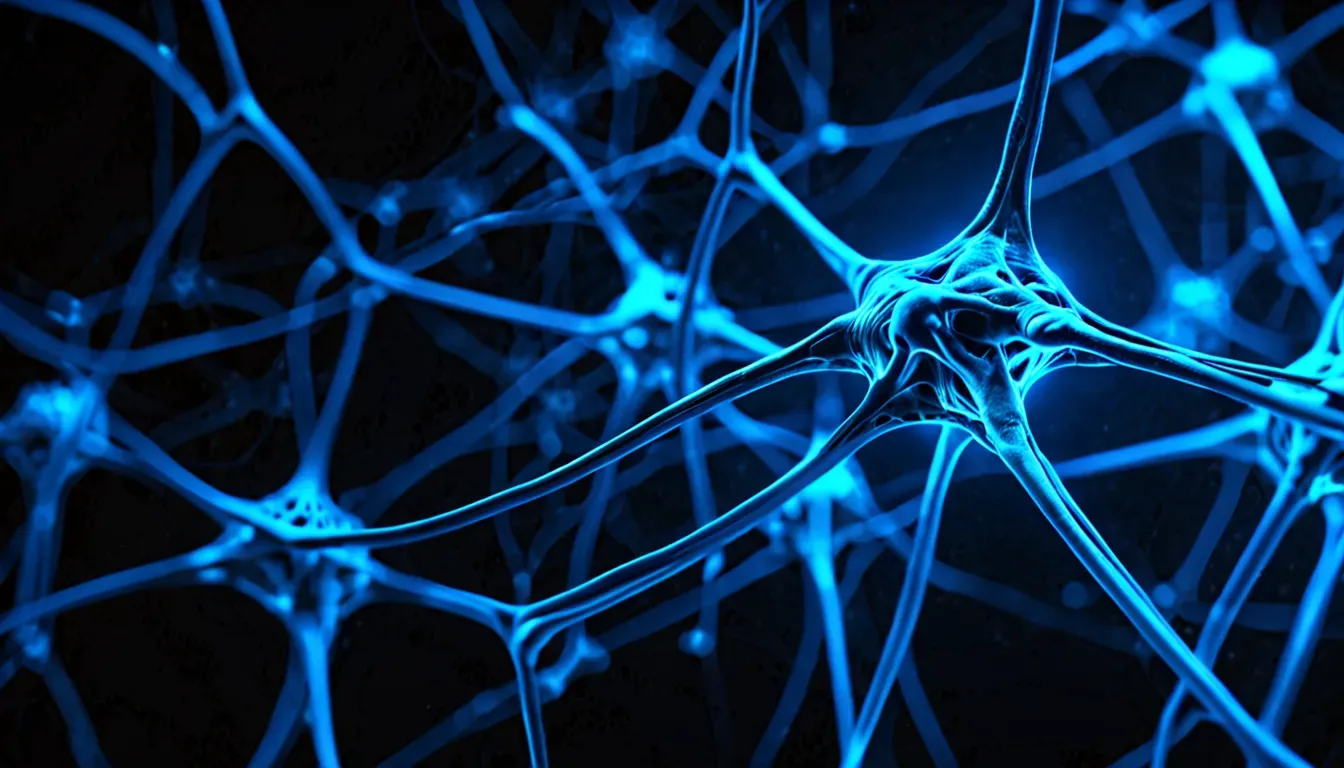
Neural networks are a special type of machine learning algorithm inspired by the structure of the human brain. They consist of thousands or billions of “neurons” — mathematical functions connected to each other.
Deep Learning — neural networks with many layers (hence “deep”). It’s thanks to deep learning that AI learned to:
- Understand and generate language (ChatGPT, Claude AI)
- Recognize images and faces
- Translate texts with accuracy approaching human level
- Create images, video, and music
Machine learning and AI are inseparably connected. But not every ML is deep learning. For simple tasks (classification, regression), classical algorithms are sufficient.
Machine Learning in Medicine — Real Examples
Medicine is one of the most important areas of ML application. Here a mistake can cost a life, so accuracy is critically important.
Cancer diagnosis: ML systems analyze MRI and X-ray scans and detect tumors at early stages with accuracy that surpasses the average radiologist.
Disease prediction: algorithms predict the risk of heart attack, diabetes, and other diseases based on test results and behavioral data.
Drug development: ML reduces the time to find new molecules from 10–15 years to a few months.
Personalized treatment: the system selects dosages and treatment protocols individually for each patient.
Machine Learning in Business — Where It’s Applied
The ML business market is impressive. Manufacturing accounts for 19% of the ML market, the financial sector — 15%, healthcare — 12%. 57% of companies worldwide already use ML to improve customer experience.
Finance: fraud detection, algorithmic trading, credit risk assessment, personalized financial recommendations.
Retail: demand forecasting, inventory management, personalized product recommendations, dynamic pricing.
Marketing: audience segmentation, targeted advertising, customer churn prediction, A/B testing.
Logistics: delivery route optimization, equipment failure prediction, warehouse automation.
HR: resume screening, candidate performance prediction, employee satisfaction analysis.
Advantages and Limitations of Machine Learning
Advantages
✅ Scalability — one model can process millions of requests simultaneously, which is impossible with human analysts.
✅ Finds hidden patterns — ML discovers dependencies that a human would never notice in large datasets.
✅ Learns over time — unlike regular programs, ML models improve as new data accumulates.
✅ Automates routine work — frees people from repetitive tasks of classification, prediction, and analysis.
Limitations
❌ Requires large amounts of data — an accurate model needs thousands or millions of examples.
❌ “Black box” — it’s hard to explain exactly why a model made a specific decision.
❌ Bias — if training data contains biases, the model will reproduce them. For example, if the data contains more photos of people of a certain race — recognition will be worse for others.
❌ Requires computing resources — training large models (deep learning) requires powerful hardware.
Machine Learning and ChatGPT — What’s the Connection

ChatGPT, Claude AI, Gemini, and other modern AI chatbots are products of deep learning, which is part of machine learning.
More specifically: they are built on the transformer architecture — a type of neural network developed by Google in 2017. These models were trained on trillions of words of text — books, articles, code, dialogues.
How it’s connected:
- Machine Learning → Deep Learning → Transformers → GPT/Claude/Gemini
When you type a query into ChatGPT — the model analyzes the context and predicts the most likely continuation based on everything it “read” during training.
Machine learning AI is not one technology, but a whole family of methods. ChatGPT is just one — the most spectacular — representative of that family.
The Future of Machine Learning
Where ML is headed in the coming years:
Multimodality — models that simultaneously understand text, images, audio, and video. Gemini AI and GPT-5 are already on this path.
AI Agents — systems that don’t just answer questions, but independently complete complex tasks — writing code, testing, publishing.
Edge ML — running models directly on devices (smartphones, sensors) without requiring a cloud connection.
Federated Learning — training models without centralized data collection, which improves privacy.
Regulation — the EU’s AI Act is already in effect, regulating the application of AI and ML in sensitive areas.
Frequently Asked Questions (FAQ)
What is machine learning in simple terms? Machine learning is a technology that allows computers to learn from examples and make decisions without explicit programming. Like how a person learns from experience — but much faster.
How does machine learning differ from artificial intelligence? Artificial intelligence is a broad field of creating intelligent systems. Machine learning is one of the methods for achieving this through learning from data. ML is a part of AI.
What is deep learning and how is it connected to ML? Deep learning is a subfield of machine learning that uses neural networks with many layers. ChatGPT, Claude AI, and other modern models are built on it.
Can you learn machine learning without a math background? For understanding the concepts — yes. For building your own models — basic statistics and linear algebra are needed. But today tools like ChatGPT and deeplearning.ai have significantly lowered the entry barrier.
Where is machine learning applied? Everywhere: medicine, finance, retail, transportation, marketing, manufacturing, entertainment. In short — wherever there is data and a need for prediction or classification.
Conclusion
Machine learning is not science fiction and not the exclusive domain of programmers. It’s a technology that has already changed the world around you and continues to do so every day.
Understanding the basics of ML in 2026 is just as important as understanding what artificial intelligence is or knowing how to use the internet. It’s the basic digital literacy of our time.
At TechVisor we continue publishing educational content about AI and technology. The next article — “AI for Work: A Practical Guide“ — specific tools and scenarios for boosting productivity.
Article prepared by the TechVisor team — practical IT media for people.