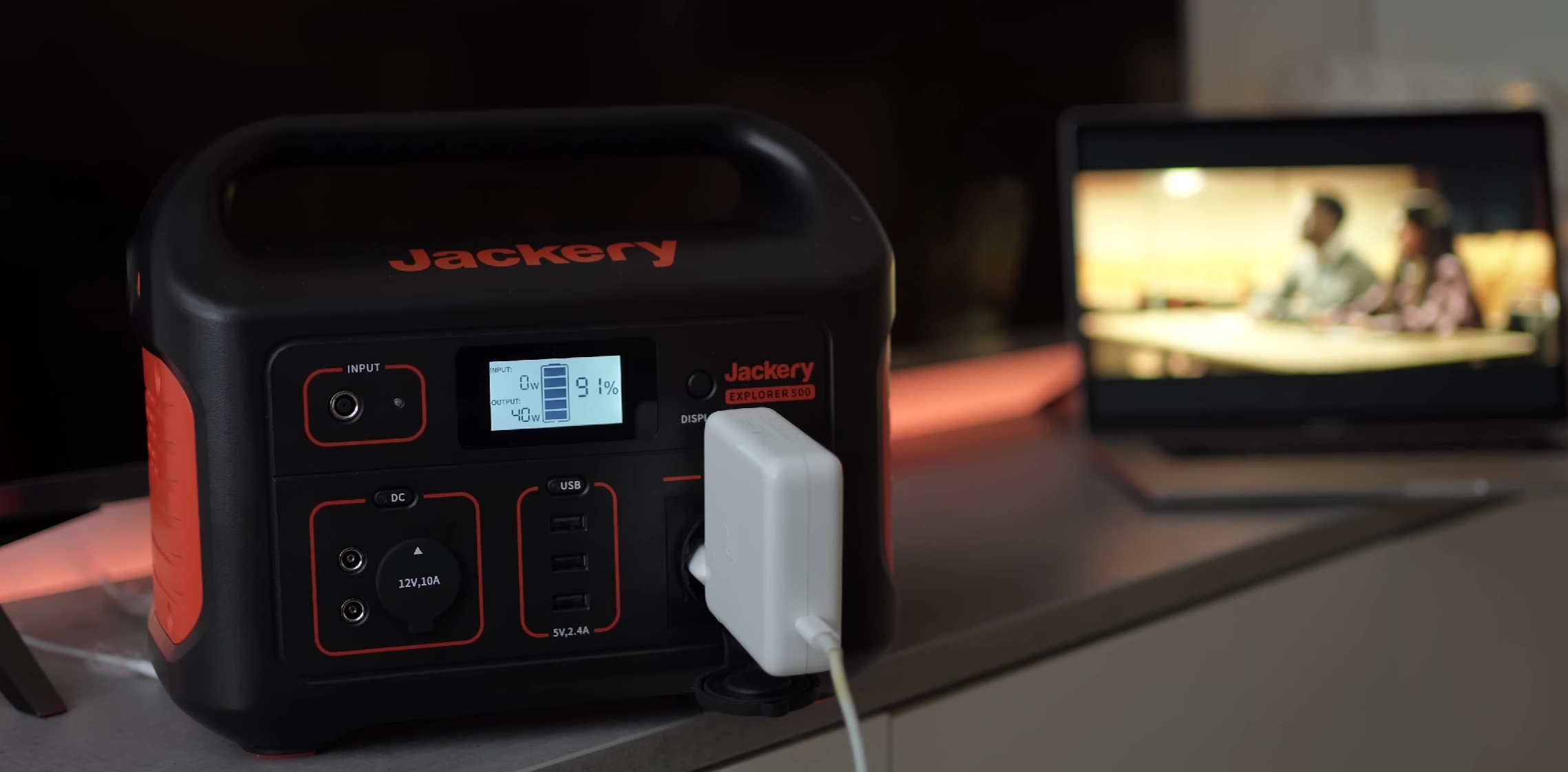

A portable power station and a stationary home power station are two different things. They differ in weight, output, purpose, and price. If you are looking for something you can throw into a backpack, put in the trunk, or take outdoors — this article is for you.
We have gathered five compact models under 10 kg that are actually sold in Ukraine in 2026. No theoretical overviews — only current prices, honest pros and cons, and a clear answer: which one is right for you.
If you need a powerful station for a house, apartment, or large home instead — read our article Home Power Stations 2026 →
Portable vs. home: what is the difference
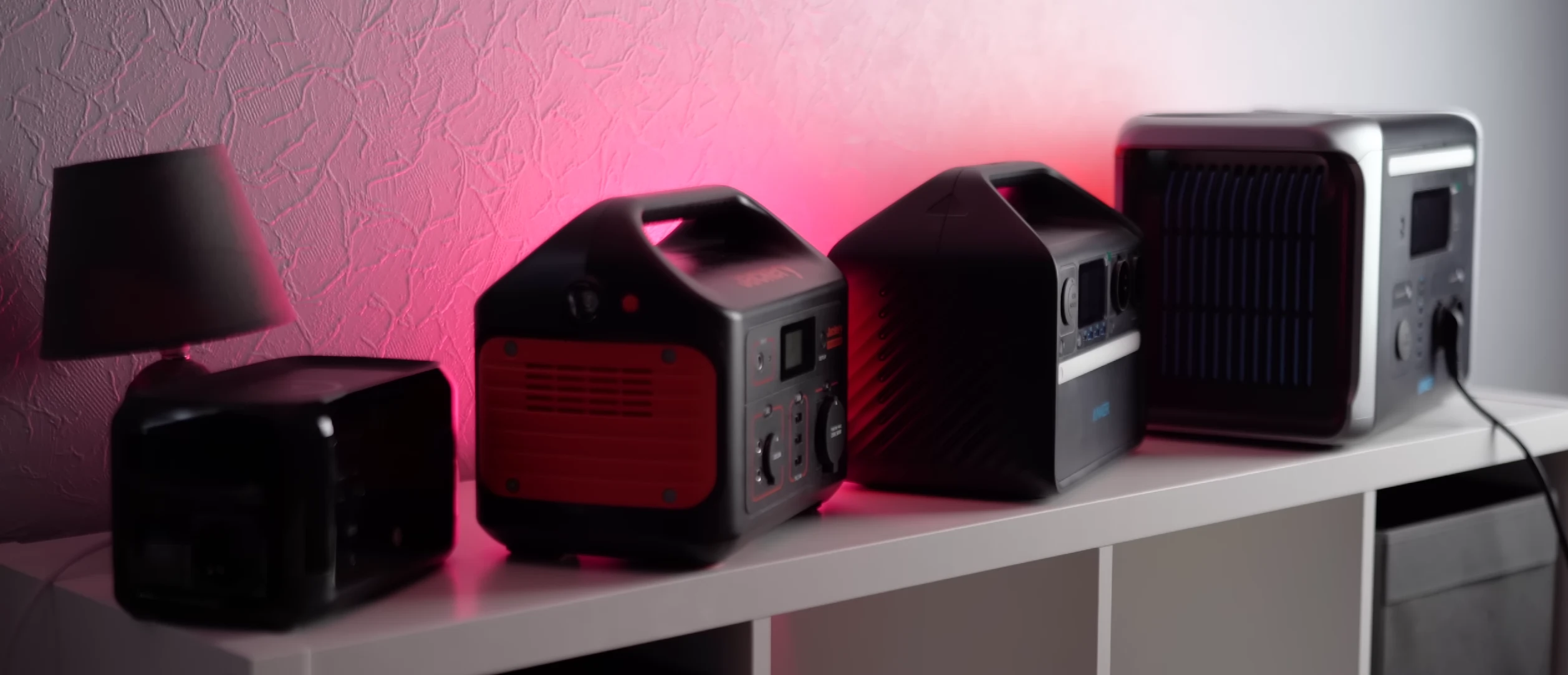
Before moving to the ranking, it is important to understand the key difference between the two types of devices.
| Parameter | Portable station | Home / stationary |
|---|---|---|
| Weight | up to 10 kg | 12–55 kg |
| Capacity | 200–1,100 Wh | 1,000–4,000+ Wh |
| Power | 300–1,500 W | 1,800–4,000 W |
| Purpose | Road trips, camping, car use, short outages | House, apartment, long outages |
| Price (UA) | from UAH 8,000 to UAH 35,000 | from UAH 25,000 to UAH 145,000 |
| Mobility | High — can be carried by hand | Low — moved around indoors |
A portable power station is the right choice if:
- You often go outdoors, fishing, or camping
- You need a station in the car for long trips
- Outages are rare or short for you (1–4 hours)
- You want to take it with you to work or to a shelter
- Your budget is limited and you do not need high power
What to look at when choosing: 5 main parameters
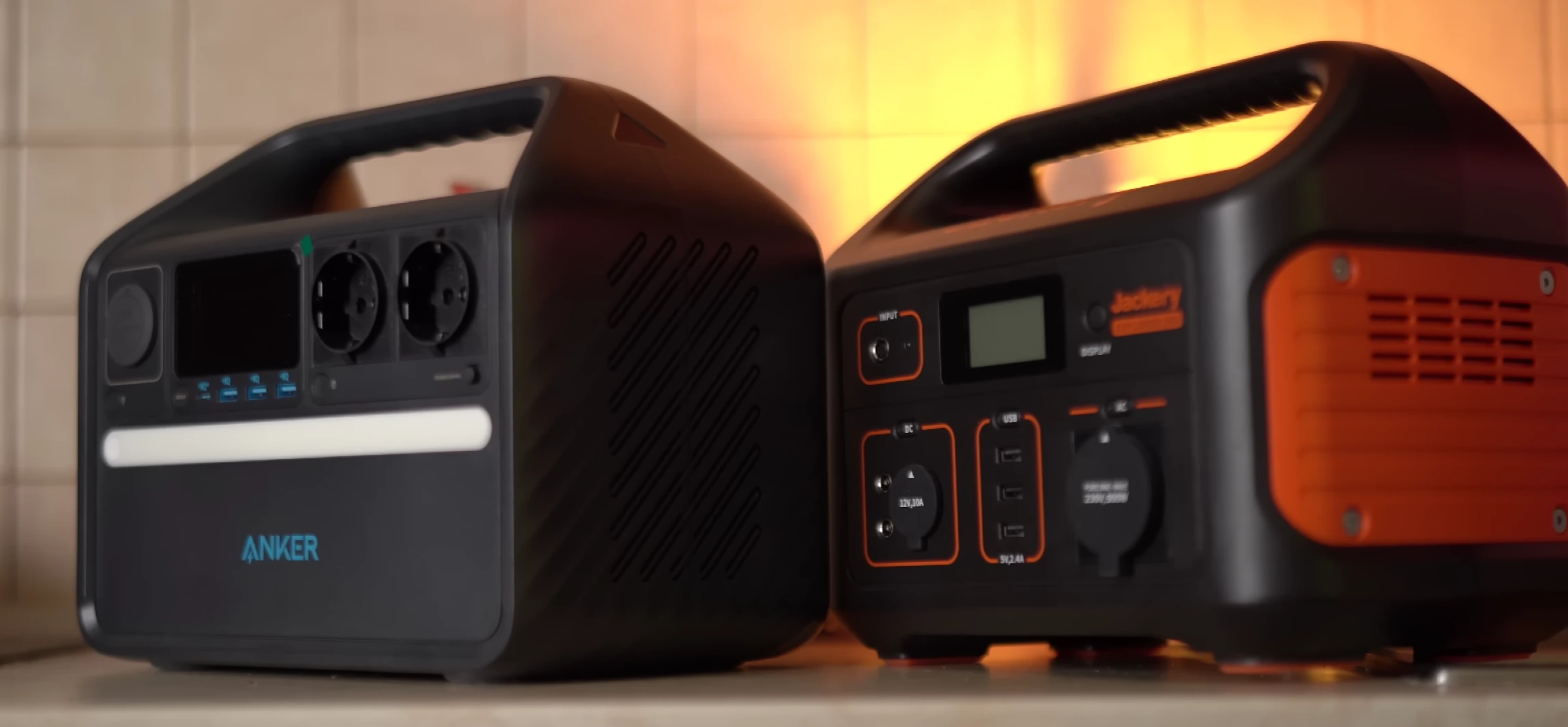
1. Capacity (Wh)
Capacity is how much energy the station stores. The more it has, the longer connected devices will run.
- 200–300 Wh — smartphones, a tablet, a small laptop, a router. Enough for 4–6 hours of basic gadget use.
- 500–800 Wh — laptop + router + lighting + TV. Optimal for camping or a short outage.
- 1,000–1,100 Wh — all of the above plus a small refrigerator for 2–3 hours.
2. Output power (W)
Power determines which devices can be connected. If a device consumes more than the station’s rated power, it either will not start or will shut down.
- 300–600 W — laptop, router, phones, a small TV, LED lighting
- 800–1,200 W — all of the above + a drone, portable fridge, electric kettle (for one boil)
- 1,500 W and above — almost all portable household appliances
3. Weight and size
For a truly portable station, the critical weight is up to 8–10 kg. Anything heavier is more “transportable” than portable.
4. Battery type
All five models in our ranking use a LiFePO₄ (lithium iron phosphate) battery. This matters: LiFePO₄ is safer, does not overheat, withstands 3,000–4,000 cycles, and lasts 8–10+ years. Avoid Li-Ion models — they are cheaper, but less durable and potentially dangerous if damaged.
5. Charging speed of the station itself
A key parameter that is often ignored. If the station takes 8 hours to charge, it is inconvenient to use. Modern models charge from the wall in 1–1.5 hours.
Top 5 portable power stations of 2026
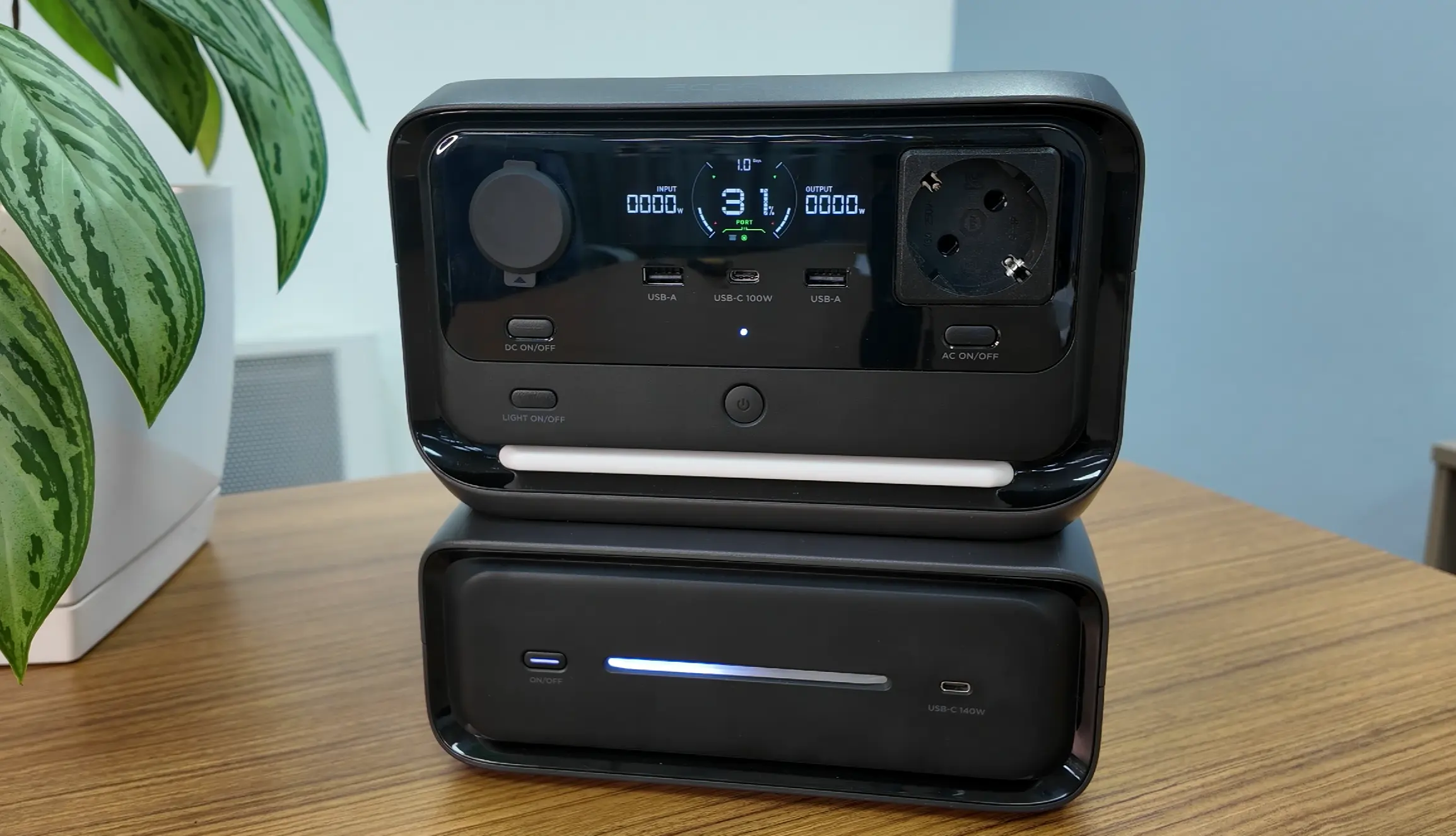
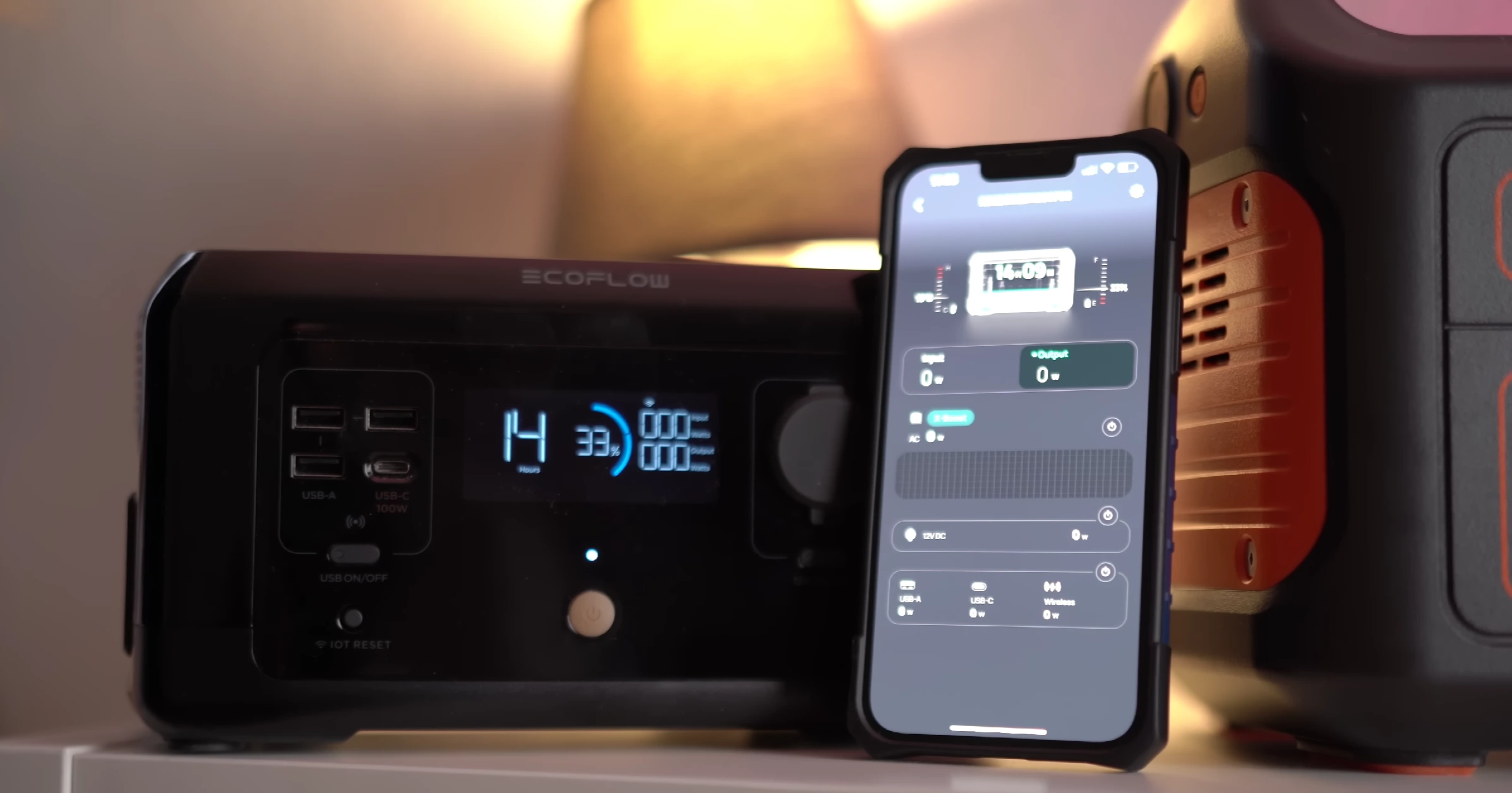
№1 — EcoFlow RIVER 3 Plus (the best balance of price and features)
| Parameter | Value |
|---|---|
| Capacity | 286 Wh |
| Output power | 600 W (1,200 W peak) |
| Charging from the grid |
~1 hour |
| Battery | LiFePO₄, 3,000+ cycles |
| Weight | 4.5 kg |
| Number of ports | 1 AC outlet, 2× USB-A, 1× USB-C (100 W), car socket |
| Solar charging | up to 100 W |
| UPS function | Yes |
| Approximate price (UA) | from UAH 18,000 |
EcoFlow RIVER 3 Plus is what we would call the “gold standard” of a portable power station in 2026. For UAH 18,000, you get a 4.5 kg device that charges in 1 hour and weighs about as much as a small basket of groceries.
At 600 W, it easily handles a laptop, router, small TV, and several smartphones at the same time. Thanks to the X-Boost function, peak power reaches 1,200 W — meaning it can even run a portable electric kettle for one boil.
What it can power on a single charge:
- Smartphone — 20–25 times
- Laptop — 4–5 full charges
- Router + laptop + LED lamp — 4–5 hours at the same time
- Small portable refrigerator (40 W) — 6–7 hours
Pros:
- The lightest in its power class — 4.5 kg
- Charges from a wall outlet in 1 hour
- Supports solar panels (up to 100 W)
- UPS function — switches instantly when the power goes out
- EcoFlow ecosystem: compatible with solar panels and expansion batteries
Cons:
- Only 1 AC outlet in the base version
- 286 Wh capacity — may not be enough for long outages
Who it is for: camping, fishing, long car trips, short outages in an apartment. If you need one device “for every occasion” in a compact format — this is it.
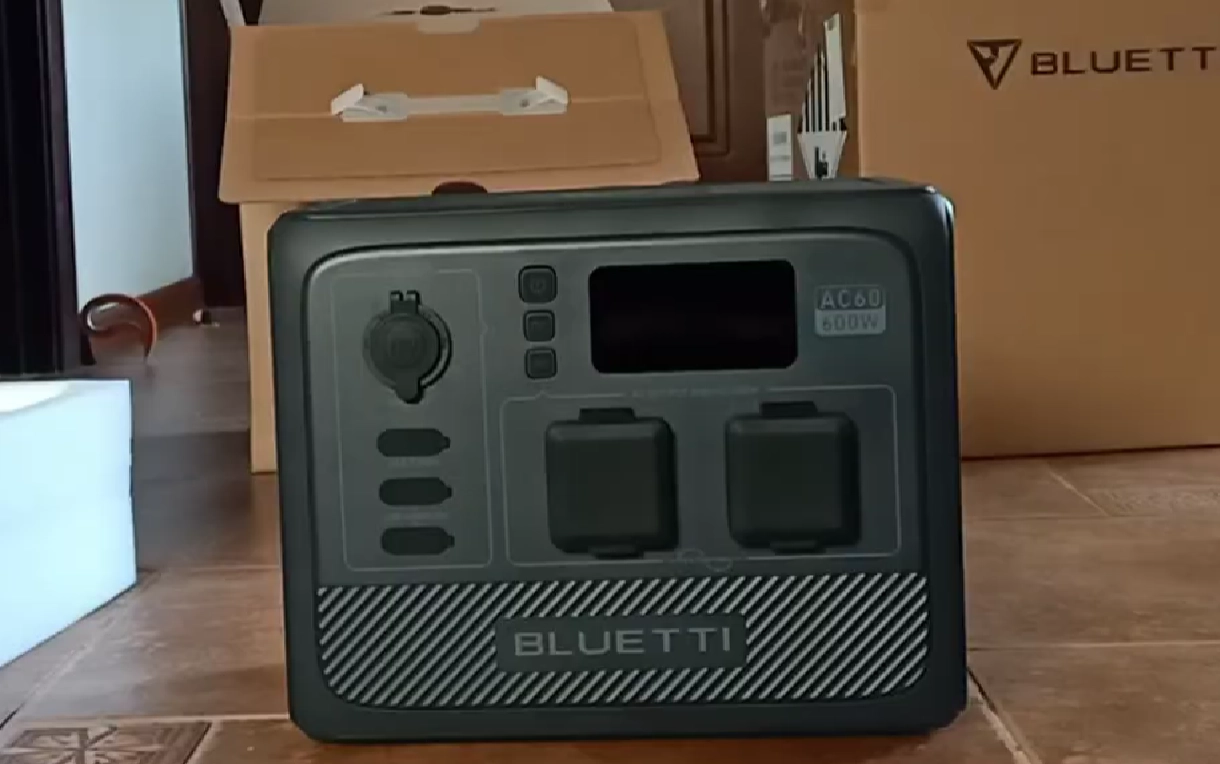
№2 — Bluetti AC60 (the best capacity in a compact format)
| Parameter | Value |
|---|---|
| Capacity | 403 Wh |
| Output power | 600 W (1,200 W peak) |
| Charging from the grid | ~1 hour |
| Battery | LiFePO₄, 3,000+ cycles |
| Weight | 7.5 kg |
| Number of ports | 2 AC outlets, 2× USB-A, 2× USB-C (100 W), car socket, wireless charging |
| Solar charging | up to 200 W |
| UPS function | Yes |
| Approximate price (UA) | from UAH 22,000 |
Bluetti AC60 differs from the RIVER 3 Plus by one substantial advantage — 403 Wh of capacity instead of 286 Wh. That is 40% more energy at a similar weight (7.5 kg). Plus 2 AC outlets instead of one.
Another ace up its sleeve is support for wireless charging (Qi) on the top panel. A small thing, but convenient: put your smartphone on top — and it charges without cables.
What it can power on a single charge:
- Smartphone — 30–35 times
- Laptop — 5–7 full charges
- Router + laptop + LED lighting — 6–8 hours
- Portable refrigerator at 40 W — 9–10 hours
Pros:
- The largest capacity among compact models (403 Wh)
- 2 AC outlets — more convenient for connecting several devices
- Qi wireless charging on the корпус
- Supports solar panels up to 200 W — twice as much as EcoFlow RIVER 3 Plus
- Capacity can be expanded (compatible with the additional B80 battery)
Cons:
- 3 kg heavier than EcoFlow RIVER 3 Plus (7.5 kg)
- More expensive (~UAH 22,000)
- Less known in Ukraine than EcoFlow
Who it is for: long camping trips for 2–5 days, a van or pickup where capacity matters and weight is not critical. Photographers and videographers — to power cameras and lighting.
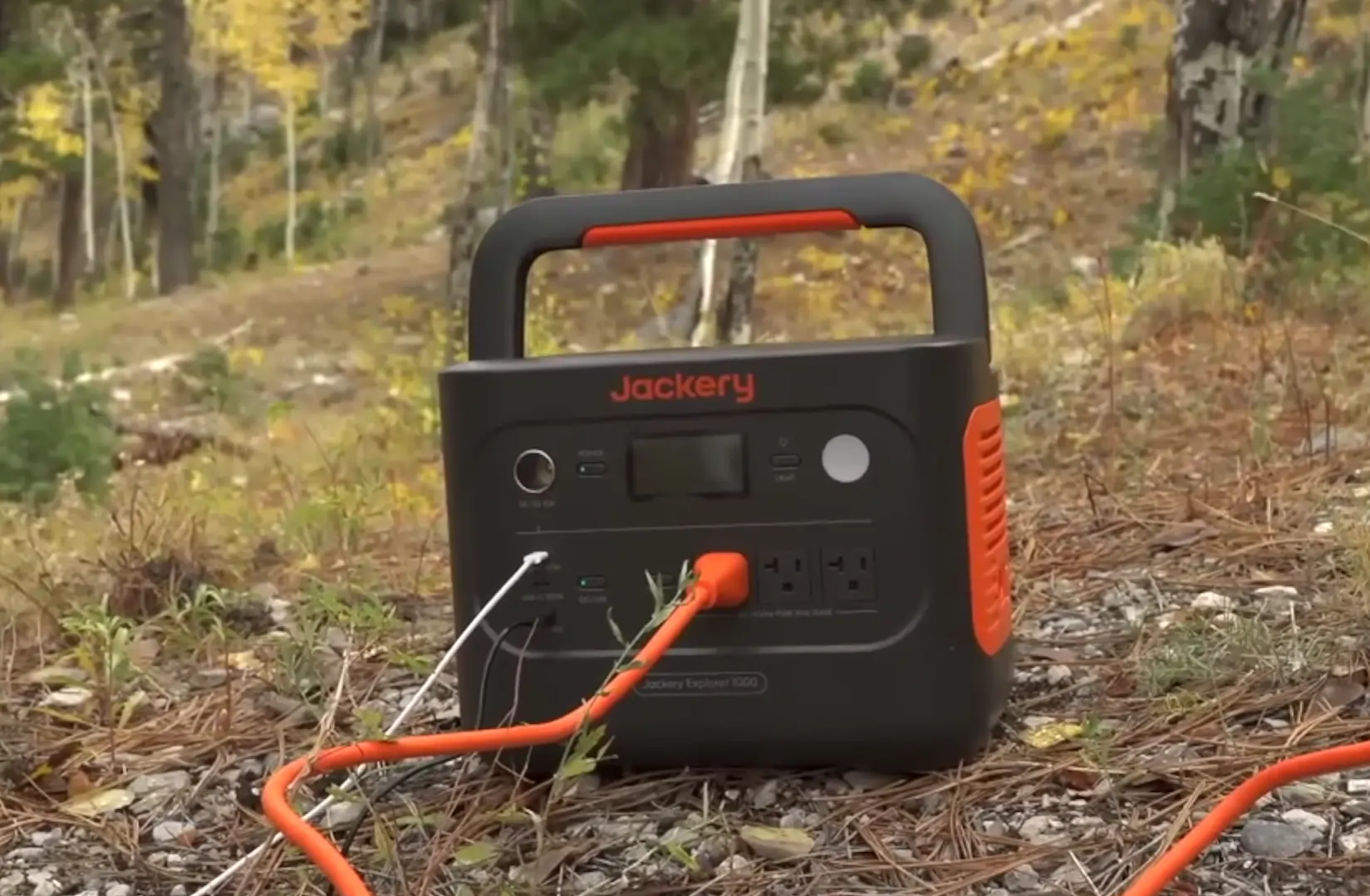
№3 — Jackery Explorer 1000 V2 (the most powerful in the ranking)
| Parameter | Value |
|---|---|
| Capacity | 1,070 Wh |
| Output power | 1,500 W (3,000 W peak) |
| Charging from the grid | ~1.7 hours |
| Battery | LiFePO₄, 4,000+ cycles |
| Weight | 10.8 kg |
| Number of ports | 2 AC outlets, 2× USB-A, 2× USB-C (100 W), car socket, DC output |
| Solar charging | up to 400 W |
| UPS function | Yes |
| Approximate price (UA) | from UAH 38,000 |
Jackery Explorer 1000 V2 is the border between a “portable” and a “home” station. 10.8 kg — you can still carry it in one hand, but not with enthusiasm. In return, 1,070 Wh of capacity and 1,500 W of power make it the most versatile in this ranking.
Jackery is an American company with an excellent reputation. Its design is recognizable: a gray-orange body and an ergonomic handle. It is a product for those who want the maximum capabilities while preserving relative mobility.
What it can power on a single charge:
- Smartphone — 60–70 times
- Laptop — 15–17 full charges
- Router + laptop + TV + LED — 8–10 hours
- Portable refrigerator at 40 W — 20+ hours
- Small electric kettle — 10–12 boils
Pros:
- The largest capacity among all 5 models in the ranking
- 1,500 W of power — runs almost all portable appliances
- 4,000+ LiFePO₄ cycles — the most durable in the ranking
- Supports solar panels up to 400 W — fast solar charging
- UPS function with switching in 30 ms
Cons:
- 10.8 kg — at the edge of “portability”
- The most expensive in the ranking (~UAH 38,000)
- Not suitable for camping with hiking approach — too heavy
Who it is for: long car trips, car camping, a cottage without electricity, outages of 6–12 hours. For those who want one device “for outdoors and for home.”
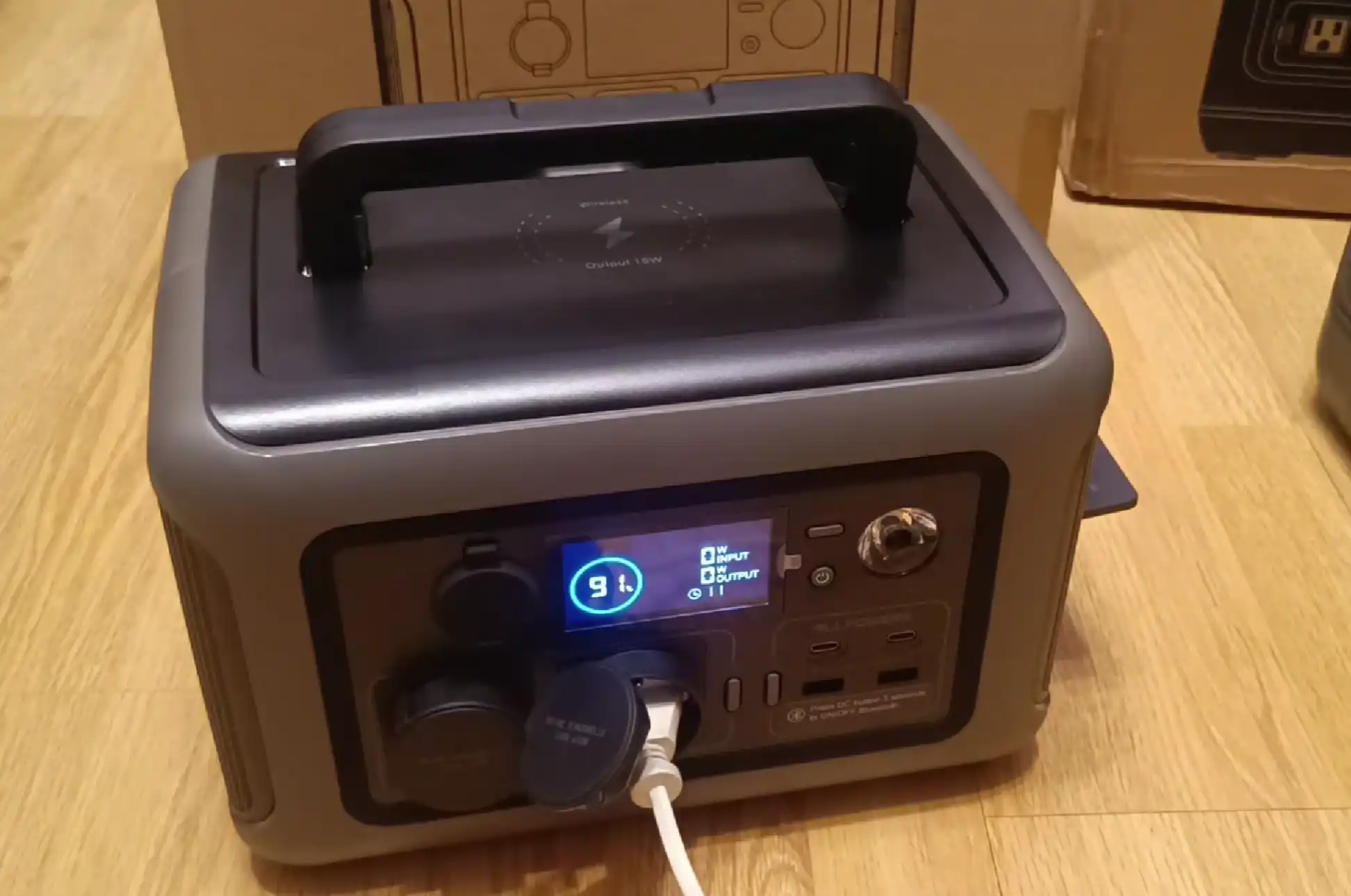
№4 — ALLPOWERS R600 (the most affordable price)
| Parameter | Value |
|---|---|
| Capacity | 299 Wh |
| Output power | 600 W (1,200 W peak) |
| Charging from the grid | ~1 hour |
| Battery | LiFePO₄, 3,500+ cycles |
| Weight | 5.4 kg |
| Number of ports | 2 AC outlets, 2× USB-A, 2× USB-C (100 W), car socket |
| Solar charging | up to 200 W |
| UPS function | Yes |
| Approximate price (UA) | from UAH 14,000 |
ALLPOWERS is a less well-known brand than EcoFlow or Jackery, but the R600 deserves attention specifically because of its price-to-spec ratio. For UAH 14,000, you get 600 W of power, a LiFePO₄ battery, and 2 AC outlets — in other words, almost the same as the Bluetti AC60 for UAH 22,000, but at a significantly lower price.
The main difference is the smaller capacity (299 Wh versus 403) and lower brand recognition. But if the budget is limited, the R600 is an honest choice.
What it can power on a single charge:
- Smartphone — 18–22 times
- Laptop — 3–4 full charges
- Router + laptop + LED — 3–4 hours at the same time
- Fan — 6–8 hours
Pros:
- The most affordable price among LiFePO₄ stations in the ranking (from UAH 14,000)
- 2 AC outlets in a compact size
- 3,500+ cycles — good longevity
- Charges in 1 hour
- Supports solar panels up to 200 W
Cons:
- Less well-known brand — fewer reviews and service centers in Ukraine
- 299 Wh capacity — the smallest among all except RIVER 3 Plus at a lower price
Who it is for: a first power station with a limited budget, infrequent outages of 1–3 hours, basic needs — laptop + router + phones.
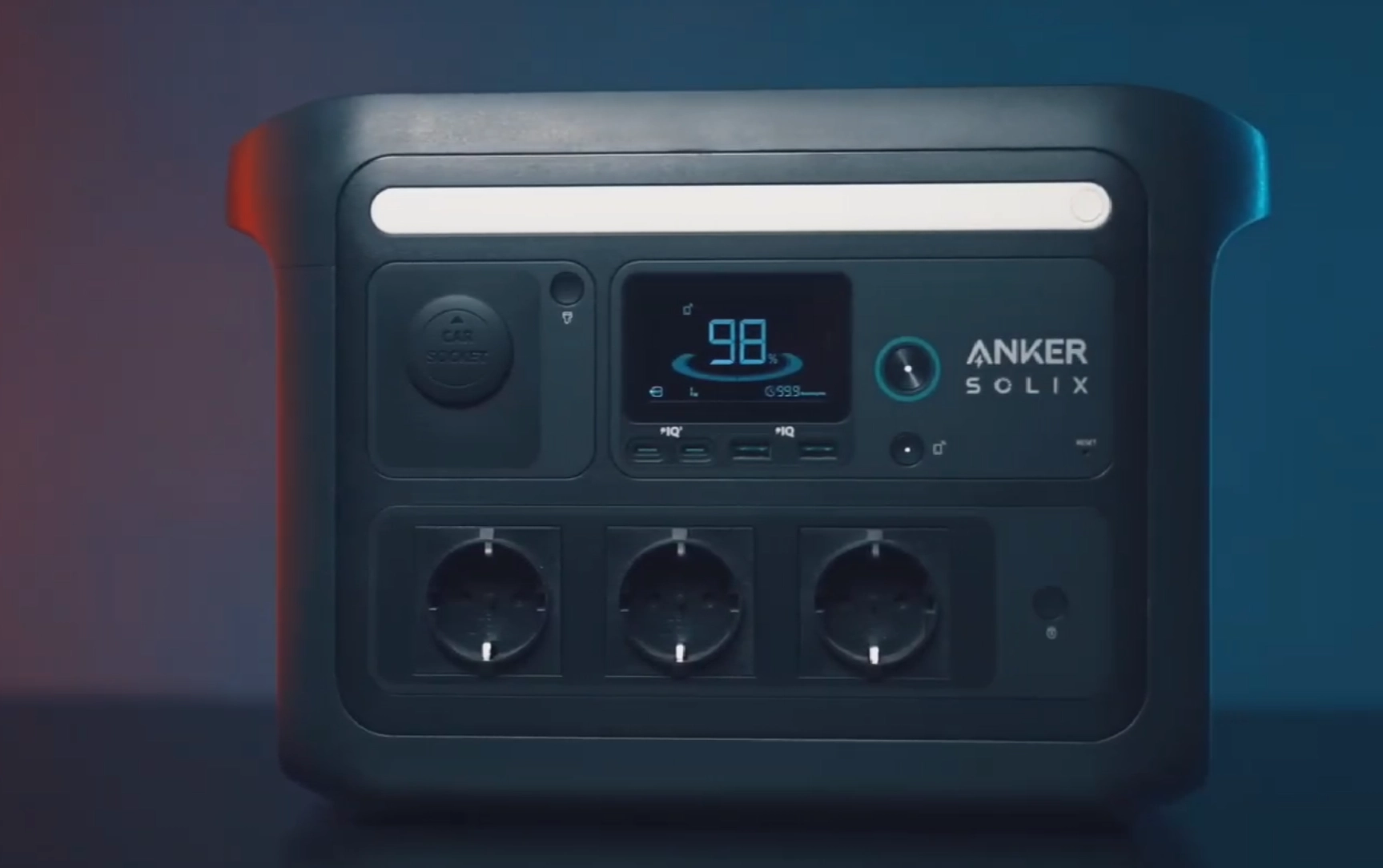
№5 — Anker Solix C800X (the best for outlets and gadgets)
| Parameter | Value |
|---|---|
| Capacity | 768 Wh |
| Output power | 1,200 W (2,400 W peak) |
| Charging from the grid | ~1 hour |
| Battery | LiFePO₄, 3,000+ cycles |
| Weight | 9.1 kg |
| Number of ports | 4 AC outlets, 4× USB-A, 2× USB-C (140 W), car socket, DC output |
| Solar charging | up to 400 W |
| UPS function | Yes |
| Approximate price (UA) | from UAH 28,000 |
Anker is a well-known American brand, primarily known for chargers and power banks. Its Solix C800X is a serious player in the portable power station segment. Its main advantage: 4 AC outlets and 10 ports overall — more than any other model in this ranking.
This is a device for those who need to connect many devices at the same time: photographers with several cameras and lights, small workshops, mobile workstations.
What it can power on a single charge:
- Smartphone — 45–50 times
- Laptop — 10–12 full charges
- Router + laptop + TV + LED — 7–9 hours
- Portable refrigerator — 15–18 hours
Pros:
- 4 AC outlets — the most in the ranking
- 10 ports total — you can connect an entire mobile office
- USB-C up to 140 W — can charge even a MacBook Pro
- 768 Wh capacity — a solid reserve
- Fast charging in 1 hour
Cons:
- 9.1 kg — heavy for prolonged carrying
- More expensive than models with similar capacity (~UAH 28,000)
Who it is for: photographers, videographers, journalists, artists — anyone who works “in the field” and needs many ports. Small mobile businesses: fairs, exhibitions, street trade.
Comparison table: top 5 portable power stations of 2026
| Model | Capacity | Power | Weight | AC outlets | Price (UA) | Best for |
|---|---|---|---|---|---|---|
| EcoFlow RIVER 3 Plus | 286 Wh | 600 W | 4.5 kg | 1 | from UAH 18,000 | Camping, lightness |
| Bluetti AC60 | 403 Wh | 600 W | 7.5 kg | 2 | from UAH 22,000 | Long camping |
| Jackery 1000 V2 | 1,070 Wh | 1,500 W | 10.8 kg | 2 | from UAH 38,000 | Maximum power |
| ALLPOWERS R600 | 299 Wh | 600 W | 5.4 kg | 2 | from UAH 14,000 | Budget choice |
| Anker Solix C800X | 768 Wh | 1,200 W | 9.1 kg | 4 | from UAH 28,000 | Many devices |
Which portable power station to choose — by scenario
Scenario 1: Camping and travel — lightness above all
You need: a laptop + phones + a flashlight + maybe a small fan. Weight should be minimal.
→ Recommended: EcoFlow RIVER 3 Plus (4.5 kg, from UAH 18,000). The lightest in the 600 W class. Charges in 1 hour and supports solar panels.
Scenario 2: Long camping trip or car trip for 3–7 days
You need: larger capacity, the ability to charge from the sun, and several ports.
→ Recommended: Bluetti AC60 (403 Wh, 7.5 kg, from UAH 22,000). The largest capacity among compact models. Solar charging up to 200 W and wireless charging as a bonus.
Scenario 3: Car, cottage, or mobile office with maximum capabilities
You need: enough power for a fridge, laptop, lighting — all at once. Weight is not critical.
→ Recommended: Jackery Explorer 1000 V2 (1,070 Wh, 1,500 W, from UAH 38,000). The most powerful in the ranking. For car trips it is ideal: load it into the trunk and forget about it.
Scenario 4: Your first power station on a limited budget
You need: something reliable, inexpensive, for basic needs during 1–3 hour outages.
→ Recommended: ALLPOWERS R600 (from UAH 14,000). LiFePO₄ battery, 2 AC outlets, charges in 1 hour. An honest choice without overpaying.
Scenario 5: Mobile work, photography, many devices at once
You need: the maximum number of ports, USB-C up to 140 W for a MacBook Pro, simultaneous power for 4–6 devices.
→ Recommended: Anker Solix C800X (4 AC outlets, 768 Wh, from UAH 28,000). More ports than any other model in this ranking.
Can you charge a portable station from a car
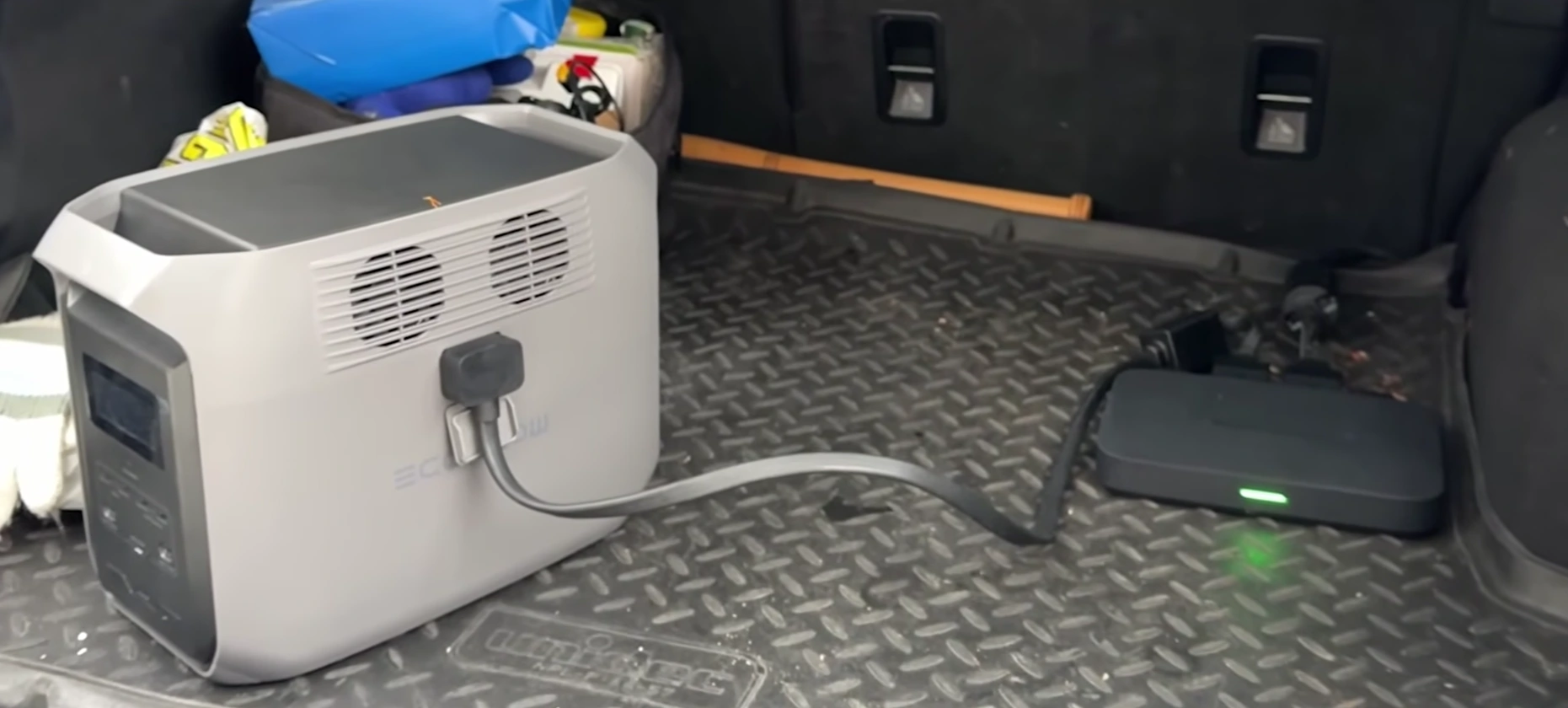
Yes — this is one of the key advantages of portable stations. All 5 models in the ranking support charging from a car cigarette lighter socket (12V).
Important to understand:
- Charging from the cigarette lighter is limited to ~8–12 A, that is about 96–144 W
- A full charge of the station from a car will take 4–8 hours (depending on capacity)
- For faster charging from a car, you need a model with alternator charging support (available in higher-end EcoFlow models)
Practical use: turn on station charging during your trip — while you drive for 3–4 hours, the station will charge to 40–60%. When you return from the outdoors, plug it into a wall outlet at home and top it up to 100% in 1 hour.
Charging from solar panels: is it worth it
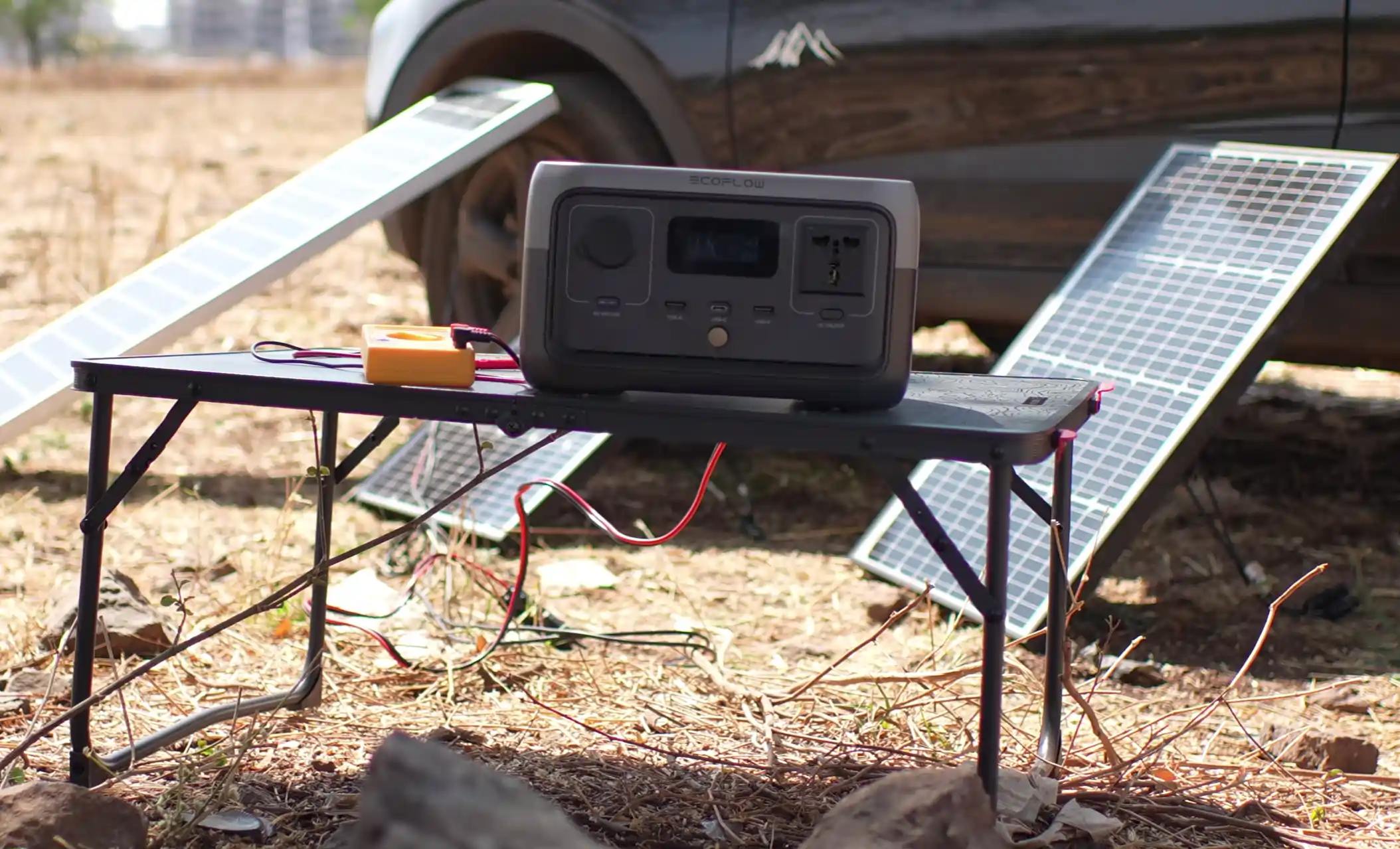
All five models support solar charging. This opens up the possibility of completely autonomous use — especially outdoors or at a cottage.
How much sun is needed:
| Model | Max solar input | Time from solar (direct sunlight) |
|---|---|---|
| EcoFlow RIVER 3 Plus | 100 W | ~3 hours |
| Bluetti AC60 | 200 W | ~2.5 hours |
| Jackery 1000 V2 | 400 W | ~3 hours |
| ALLPOWERS R600 | 200 W | ~2 hours |
| Anker Solix C800X | 400 W | ~2.5 hours |
TechVisor tip: a 100–200 W solar panel is a worthwhile investment for those who often go outdoors or have a cottage. 4–6 hours of direct sunlight = almost a full charge of an average portable station. No outlet, no running costs.
Where to buy a portable power station in Ukraine
All five models are available in Ukraine. Where to look for the best price:
- Rozetka.ua — the largest assortment, regular promotions
- Comfy.ua — installment plans without overpayment
- Foxtrot.ua — an offline chain across Ukraine
- Hotline.ua — a price aggregator, convenient for comparison
- ecoflowukraine.com — the official EcoFlow distributor
Important nuance: prices for power stations in Ukraine are dynamic. After the winter blackouts of 2025–2026, the market stabilized somewhat and prices decreased. Spring 2026 is a good time to buy: demand has fallen, but the next wave of price increases is possible with the beginning of the next heating season.
Frequently asked questions about portable power stations (FAQ)
Which portable power station is the best in 2026?
For most people — EcoFlow RIVER 3 Plus: the optimal balance between weight (4.5 kg), power (600 W), and price (from UAH 18,000). If you need maximum capacity — Jackery 1000 V2, if you are on a limited budget — ALLPOWERS R600.
Is it dangerous to use a power station indoors?
No. Unlike fuel generators, power stations do not emit exhaust gases and do not consume oxygen. They can be used safely in an apartment, room, or shelter.
How long does a portable power station last?
All models in the ranking have LiFePO₄ batteries with a lifespan of 3,000–4,000 cycles. With daily use — 8–10 years. With use 3–4 times a week — 15–20 years.
Can you keep a power station constantly plugged into the mains?
Most modern models have overcharge protection and can work in UPS mode — constantly connected to the mains, switching to the battery during an outage. But for LiFePO₄ batteries, it is recommended once a month to let them discharge to 20–30% and then recharge them to 100%.
What is the difference between a portable station and a power bank?
A power bank charges only gadgets via USB. A portable power station has AC outlets (230V), meaning it can power any devices — laptops, TVs, routers, lighting — like a regular wall socket.
Will a portable station work for a refrigerator?
It depends on the refrigerator’s power draw and the station’s capacity. A compact car refrigerator (30–50 W) — yes, Bluetti AC60 or Jackery 1000 V2 will run it for 10–20 hours. A large household refrigerator (150–200 W) — only Jackery 1000 V2, with 3–4 hours of backup time.
Conclusion
A portable power station is not a luxury, but a practical tool for the realities of Ukraine in 2026. And the difference between “portable” and “home” is fundamental: if you need to take the device with you, this top five includes the best options on the market.
Short summary:
- For camping and lightness → EcoFlow RIVER 3 Plus (4.5 kg)
- For long autonomy → Bluetti AC60 (403 Wh)
- Maximum power and capacity → Jackery 1000 V2 (1,070 Wh)
- Budget choice → ALLPOWERS R600 (from UAH 14,000)
- The most ports → Anker Solix C800X (4 AC outlets)
If your needs go beyond “portable” — 8+ hours of outages, a full house, an air conditioner — read our review Home Power Stations 2026 → and EcoFlow: Which Model to Choose in 2026 →
Article prepared by the TechVisor team — practical IT media for people.