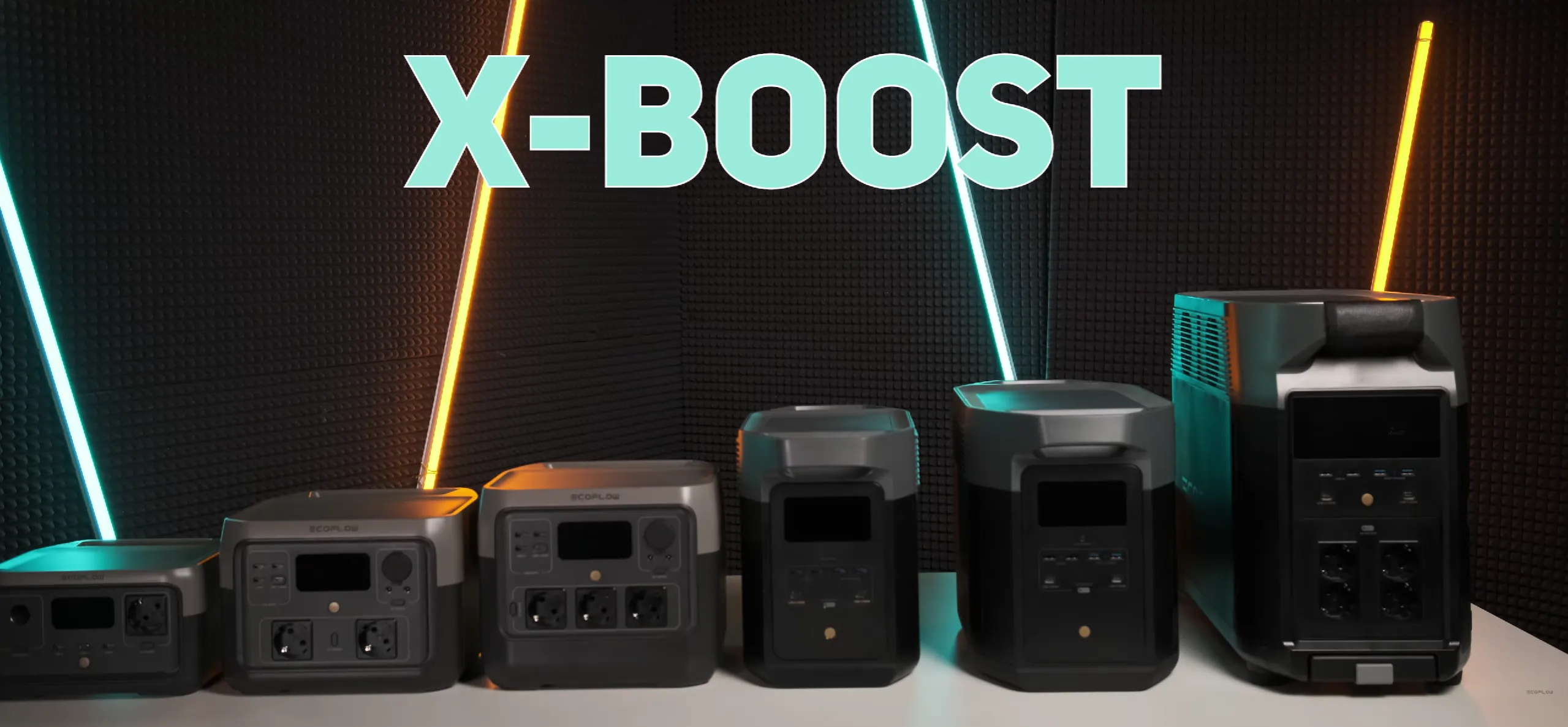

EcoFlow is a brand without which it is hard to imagine the modern portable energy market. Since the start of the full-scale invasion, demand for power stations in Ukraine has increased dozens of times, and EcoFlow has become synonymous with reliability for millions of households.
But the product lineup is large. RIVER 3, DELTA 3, DELTA 3 Plus, DELTA Pro 3 — what is the difference between them, and which one is right for you? In this review, we break down the current generation of EcoFlow stations for 2026, compare specifications, and give clear recommendations by usage scenario.
Why EcoFlow is the market leader
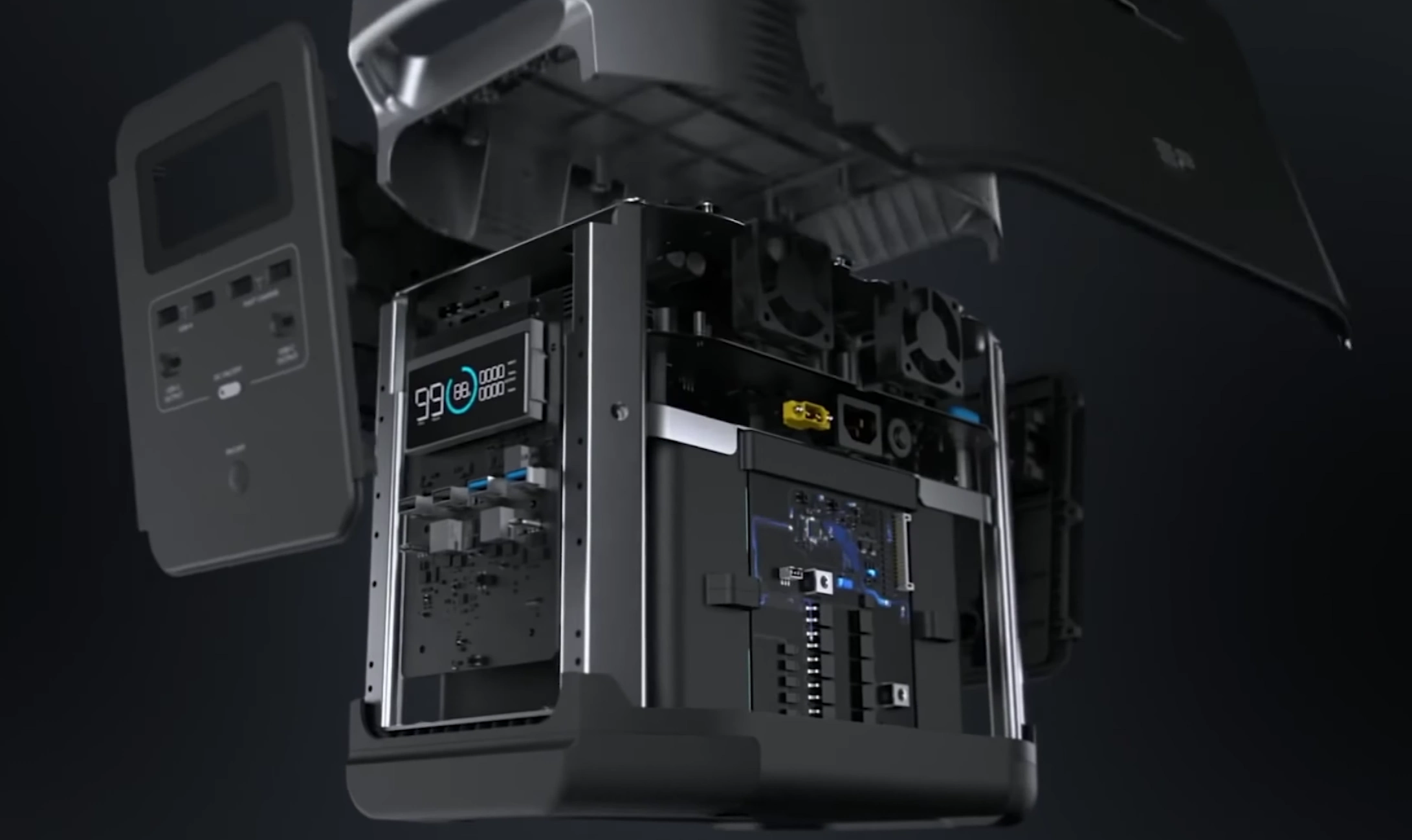
EcoFlow was founded in 2017 in China and within a few years turned into the No. 1 company in the portable power station segment. Three things made them leaders:
Fast charging. Before EcoFlow, charging a station took 6–8 hours. EcoFlow reduced this time to 1–1.6 hours thanks to X-Stream technology — and that changed the market.
LiFePO₄ batteries. All modern EcoFlow models use lithium iron phosphate batteries. They are safer than Li-Ion, do not overheat, and withstand 3,000–6,000 charge cycles — that is, they last 10+ years with daily use.
Ecosystem. EcoFlow is not just a station. It is a platform: solar panels, expansion batteries, a smartphone app, Smart Home Panel for connecting to a house. Everything is compatible with each other.
Overview of the EcoFlow 2026 lines: what each series is for
EcoFlow builds its lineup according to a simple logic: RIVER — compactness and mobility, DELTA — power and home use, DELTA Pro — backup power for an entire home or business.
In 2024–2025, the company updated all series to the third generation. Let’s go through each one.
EcoFlow RIVER 3 — for travel and basic needs
RIVER 3 technical specifications
| Parameter | RIVER 3 | RIVER 3 Plus | RIVER 3 Max |
|---|---|---|---|
| Capacity | 245 Wh | 286 Wh | 572 Wh |
| Output power | 300 W (600 W peak) | 600 W (1200 W peak) | 600 W (1200 W peak) |
| AC charging | ~1 hour | ~1 hour | ~1 hour |
| Battery | LiFePO₄, 3,000+ cycles | LiFePO₄ | LiFePO₄ |
| UPS function | Yes (RIVER 3 UPS version) | Yes | Yes |
| Weight | ~3.5 kg | ~4.5 kg | ~7.3 kg |
| Estimated price (UA) | from UAH 13,500 | from UAH 18,000 | from UAH 22,000 |
Who the RIVER 3 is for
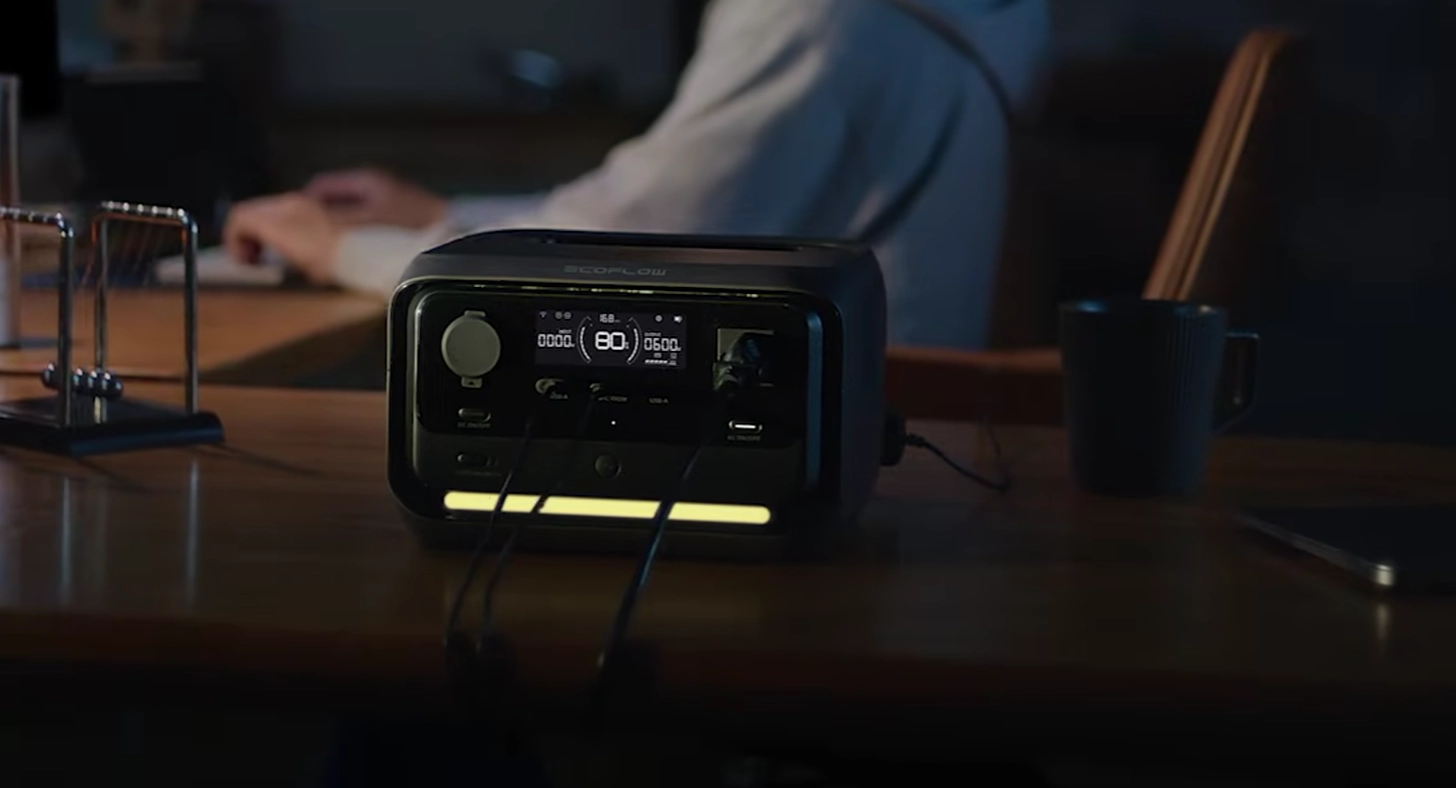
RIVER 3 is the most compact and lightest station in the current EcoFlow lineup. It weighs only 3.5 kg and easily fits into a backpack.
What it can handle: charging smartphones and tablets, a laptop, a router, and a small LED light. On one charge — 3–5 hours of router and laptop operation simultaneously.
What it cannot handle: a refrigerator, microwave, electric kettle, powerful lighting systems.
RIVER 3 is ideal for:
- Camping, picnics, outdoor trips
- Short-term outages in an apartment (1–3 hours)
- Working on the road: laptop + phone + router
- A balcony or a summer house without постоянного power supply
TechVisor tip: if you want to try EcoFlow “for a start” and your budget is limited — RIVER 3 is the most affordable entry into the ecosystem. Later you can buy an expansion battery or move to the DELTA series.
EcoFlow DELTA 3 and DELTA 3 Plus — the heart of the home lineup
DELTA 3 technical specifications
| Parameter | DELTA 3 | DELTA 3 Plus | DELTA 3 (1500) |
|---|---|---|---|
| Capacity | 1,024 Wh | 1,024 Wh | 1,536 Wh |
| Output power | 1,800 W | 1,800 W | 1,800 W |
| Peak power (X-Boost) | 3,600 W | 3,600 W | 3,600 W |
| AC charging | ~1.6 hours | ~1.6 hours | ~2 hours |
| Maximum expandable capacity | up to 5 kWh | up to 5 kWh | up to 5 kWh |
| Solar charging | up to 500 W | up to 500 W | up to 500 W |
| Battery | LiFePO₄, 4,000+ cycles | LiFePO₄, 4,000+ cycles | LiFePO₄ |
| UPS function | Yes | Yes | Yes |
| Weight | ~13 kg | ~13 kg | ~17 kg |
| Estimated price (UA) | from UAH 29,000 | from UAH 33,000 | from UAH 38,000 |
DELTA 3 vs DELTA 2 — what is the difference
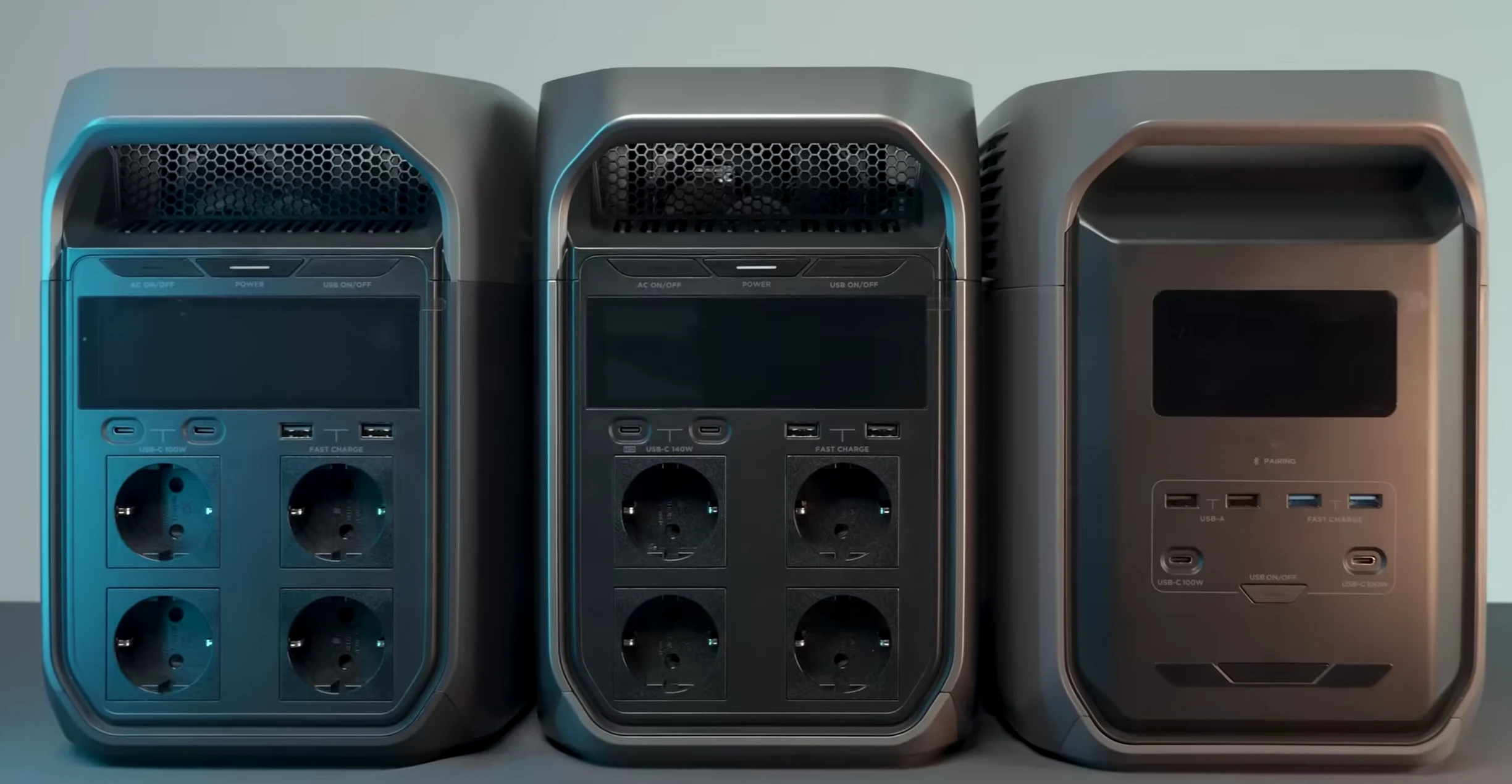
If you have an older DELTA 2 and are thinking about upgrading — here are the key differences:
| DELTA 2 | DELTA 3 | |
|---|---|---|
| Capacity | 1,024 Wh | 1,024 Wh |
| Power | 1,800 W | 1,800 W |
| Peak (X-Boost) | 2,700 W | 3,600 W |
| Max expansion | up to 3 kWh | up to 5 kWh |
| Car charging (alternator) | No | Yes (800 W) |
| Solar charging | up to 500 W | up to 500 W |
| Price | from UAH 25,800 | from UAH 29,000 |
Conclusion: DELTA 3 costs about UAH 3,000 more, but gives significantly higher peak power and greater expansion possibilities. If you need maximum flexibility — choose DELTA 3. If your budget is limited and your needs are basic — DELTA 2 is still relevant.
What DELTA 3 can really handle
Thanks to 1,800 W of power and X-Boost up to 3,600 W, DELTA 3 can handle:
- Refrigerator — 150–200 W, 5–6 hours on one charge
- Router + laptop + lighting — simultaneously, 8–10 hours
- TV — 3–4 hours
- Electric kettle (700–1,000 W) — 1–2 boils
- Fan or low-power heater — up to 6 hours
What it will not handle without expansion: a full-size air conditioner (2,500–3,500 W), an electric boiler (2,000+ W). For such tasks — you need DELTA Pro 3.
Who DELTA 3 is for
EcoFlow DELTA 3 is the optimal choice for:
- An apartment or house during outages lasting 4–8 hours
- Those who want to cover basic needs: light, router, laptop, refrigerator
- Owners of solar panels — the station charges from solar up to 500 W
- Those thinking about the future: it can be expanded up to 5 kWh by buying a battery
EcoFlow DELTA Pro 3 — for large homes and businesses
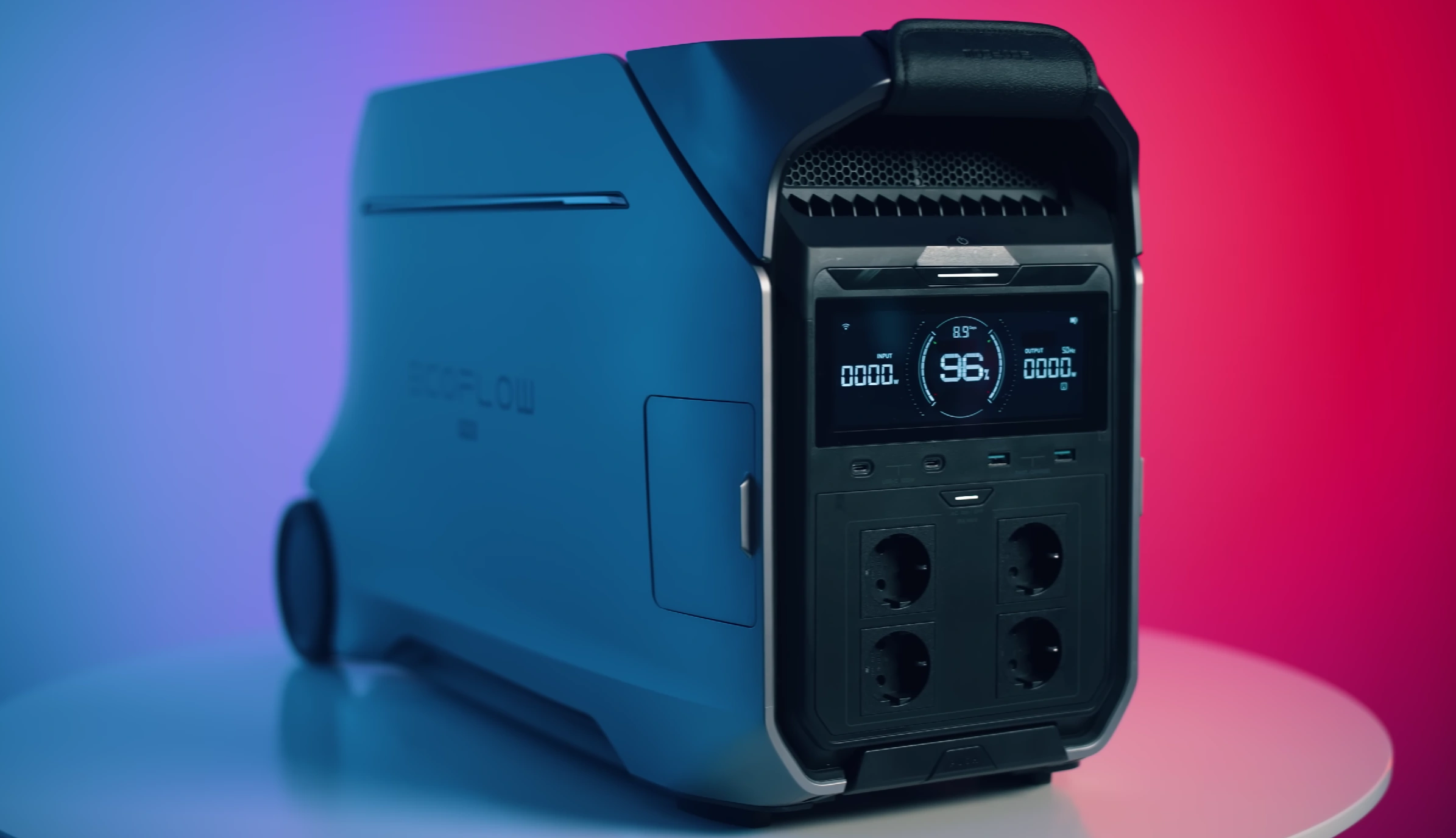
DELTA Pro 3 technical specifications
| Parameter | Value |
|---|---|
| Capacity | 4,096 Wh |
| Output power | 4,000 W |
| Peak power (X-Boost) | 8,000 W |
| AC charging | ~2 hours |
| Max expandable capacity | up to 12 kWh |
| Solar charging | up to 2,400 W |
| Battery | LiFePO₄, 4,000+ cycles |
| UPS function | Yes, instant switching |
| Protection | IP65 (dust and water) |
| Weight | ~55 kg (has wheels) |
| Estimated price (UA) | from UAH 110,000 to 145,000 |
What DELTA Pro 3 can do
DELTA Pro 3 is no longer just a “charging station,” but a full-fledged backup power system for a home or small business.
Thanks to 4,000 W of power and X-Boost up to 8,000 W, it can simultaneously power:
- A 3-ton air conditioner
- A washing machine
- A water pump
- Lighting for an entire floor
- Several computers and other equipment
The UPS function ensures instant switching to battery power when electricity goes out — your devices will not even “blink.” It connects to the home switchboard via EcoFlow Smart Home Panel 2.
Who DELTA Pro 3 is for
DELTA Pro 3 is the right choice if:
- You have a private house or cottage with high consumption
- You need uninterrupted power (servers, NAS, medical equipment, security cameras)
- You have or plan to install solar panels (up to 2,400 W input!)
- You run a small business: café, shop, workshop
- Frequent and long outages (8–24 hours)
Important: DELTA Pro 3 costs from UAH 110,000 — this is a serious investment. For most apartments and small homes with outages of 4–8 hours, DELTA 3 is enough.
Comparison table of all EcoFlow 2026 models
| Model | Capacity | Power | Peak (X-Boost) | Weight | Price (UA) | Who it is for |
|---|---|---|---|---|---|---|
| RIVER 3 | 245 Wh | 300 W | 600 W | 3.5 kg | from UAH 13,500 | Camping, travel |
| RIVER 3 Plus | 286 Wh | 600 W | 1,200 W | 4.5 kg | from UAH 18,000 | Camping + apartment |
| RIVER 3 Max | 572 Wh | 600 W | 1,200 W | 7.3 kg | from UAH 22,000 | Extended mobility |
| DELTA 2 | 1,024 Wh | 1,800 W | 2,700 W | 12 kg | from UAH 25,800 | Apartment, basic needs |
| DELTA 3 | 1,024 Wh | 1,800 W | 3,600 W | 13 kg | from UAH 29,000 | Apartment, expansion |
| DELTA 3 Plus | 1,024 Wh | 1,800 W | 3,600 W | 13 kg | from UAH 33,000 | Apartment + solar |
| DELTA 3 (1500) | 1,536 Wh | 1,800 W | 3,600 W | 17 kg | from UAH 38,000 | House, long outages |
| DELTA Pro 3 | 4,096 Wh | 4,000 W | 8,000 W | ~55 kg | from UAH 110,000 | Large house, business |
Which EcoFlow power station to choose — by scenario
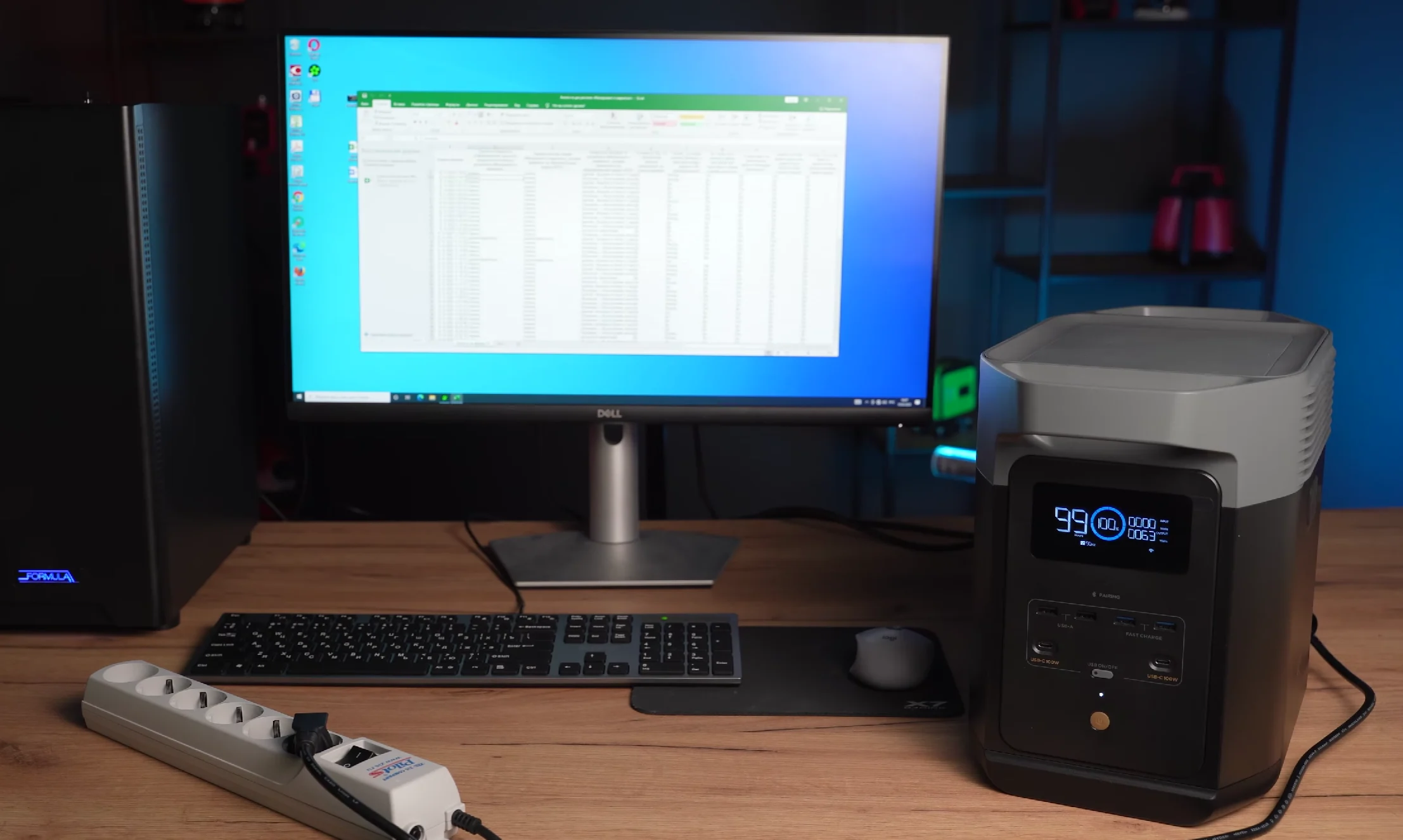
We collected the most common situations and gave a direct answer.
Scenario 1: Apartment, outages for 4–6 hours, basic needs
Needed: router, laptop, lighting, charging phones.
→ We recommend: EcoFlow DELTA 3 (from UAH 29,000). One charge will last for the entire outage period with a large reserve. If your budget is limited — consider DELTA 2 (from UAH 25,800).
Scenario 2: Apartment, outages up to 8 hours, refrigerator is important
Needed: router + laptop + refrigerator + lighting.
→ We recommend: EcoFlow DELTA 3 or DELTA 3 (1500). DELTA 3 with 1,024 Wh can handle a refrigerator for 5–6 hours. If outages are longer — choose DELTA 3 (1500) with 1,536 Wh capacity.
Scenario 3: Camping, summer house, outdoor trips
Needed: compactness, light weight, gadget charging, LED lighting.
→ We recommend: EcoFlow RIVER 3 Plus (from UAH 18,000). The optimal balance between weight and power. RIVER 3 Plus can even handle a small TV or a fan.
Scenario 4: Private house, long outages, want to connect to the switchboard
Needed: all household appliances, UPS mode, possible connection of solar panels.
→ We recommend: EcoFlow DELTA Pro 3 (from UAH 110,000). This is the only model in the lineup with the ability to connect to the home switchboard and enough power to run all important appliances.
Scenario 5: Budget option — first power station
I want to try it, budget up to UAH 15,000.
→ We recommend: EcoFlow RIVER 3 (from UAH 13,500). The most affordable entry into the EcoFlow ecosystem. It will cover basic needs, and if necessary — can be expanded or replaced.
How to buy EcoFlow in Ukraine — where and for how much
EcoFlow is officially represented in Ukraine. Here are the current purchase channels:
Official website and partners:
- ecoflowukraine.com — official distributor
- Rozetka.ua — large assortment, regular promotions
- Comfy.ua — installment plans available
- Hotline.ua — price comparison across different stores
Prices in UAH (estimated, April 2026):
- RIVER 3 — from UAH 13,500
- RIVER 3 Plus — from UAH 18,000
- DELTA 2 — from UAH 25,800
- DELTA 3 — from UAH 29,000
- DELTA 3 Plus — from UAH 33,000
- DELTA Pro 3 — from UAH 110,000
TechVisor tip: watch seasonal promotions — EcoFlow regularly gives 15–25% discounts on older models when new ones appear. Especially good prices are often available in November (Black Friday) and after the release of a new generation.
Frequently asked questions about EcoFlow (FAQ)
How long do EcoFlow power stations last?
All modern EcoFlow models (RIVER 3, DELTA 3, DELTA Pro 3) use LiFePO₄ batteries with a lifespan of 3,000–6,000 charge cycles. With daily use — that is 8–15 years of service. The manufacturer gives a 5-year warranty on most models.
Can EcoFlow be charged from solar panels?
Yes. All EcoFlow models support charging from solar panels. RIVER 3 accepts up to 110 W, DELTA 3 — up to 500 W, DELTA Pro 3 — up to 2,400 W. EcoFlow also produces its own solar panels, fully compatible with all stations.
What is the difference between DELTA 3 and DELTA 3 Plus?
Technically, the specifications are almost the same: 1,024 Wh, 1,800 W, LiFePO₄. DELTA 3 Plus comes with an additional cable for connecting solar panels and has slightly more ports. The price difference is about UAH 4,000. If you plan to use solar panels — choose Plus, if not — the basic DELTA 3 is enough.
Can EcoFlow be connected to the home switchboard?
Only DELTA Pro 3 supports direct connection to the switchboard through EcoFlow Smart Home Panel 2. This is not provided for DELTA 3 — it connects to specific appliances through ordinary sockets.
Which EcoFlow power station is the quietest?
RIVER 3 is the quietest thanks to its low power and cooling without an active fan under light load. DELTA Pro 3 has X-Quiet technology for quieter fan operation. DELTA 3 is audible under heavy load, but within normal limits.
Conclusion
EcoFlow in 2026 is a mature, well-developed ecosystem for any need: from the compact RIVER 3 for travel to the DELTA Pro 3, capable of powering an entire house.
Short summary: if you need a basic solution for an apartment — choose DELTA 3. For camping and mobility — RIVER 3 Plus. For a large house or business — DELTA Pro 3.
Read more about home power stations in our article Home power stations 2026 →
Article prepared by the TechVisor team — practical IT media for people.