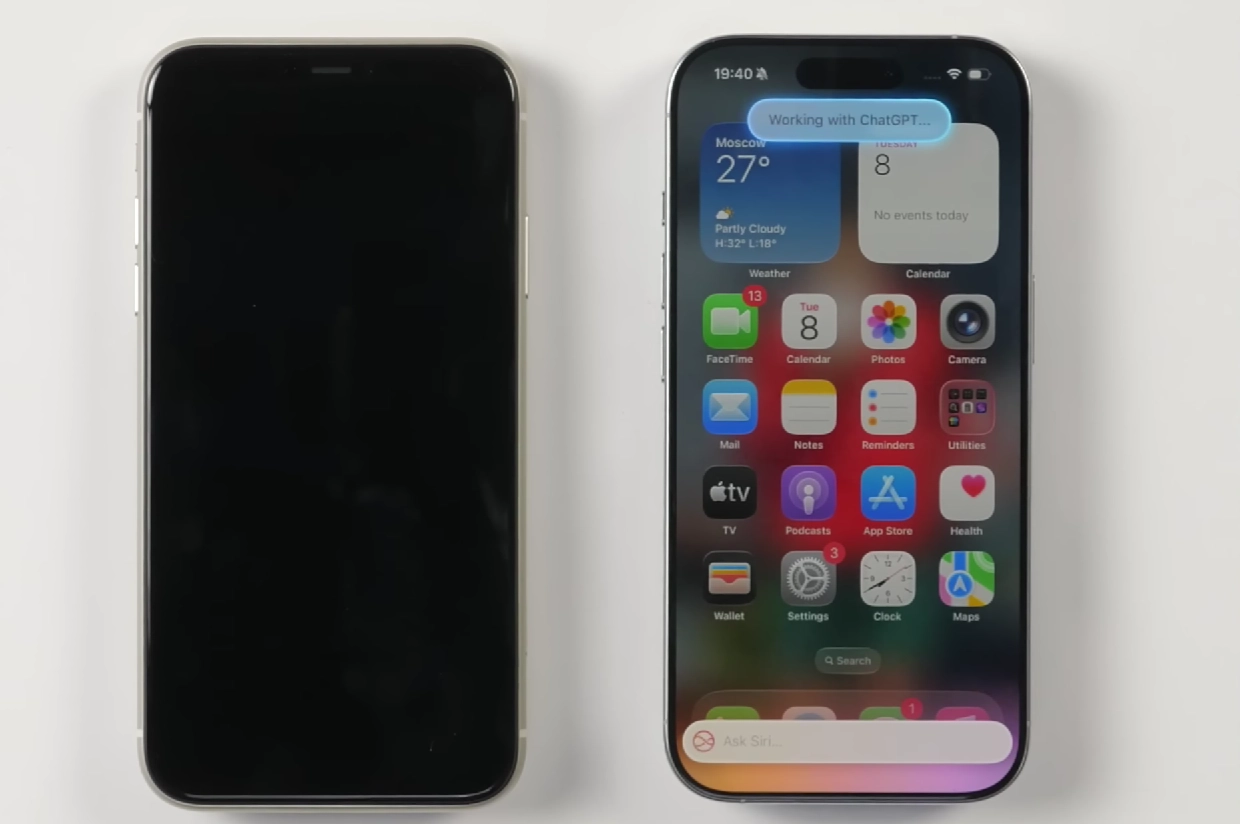

Usually, every new iPhone is a step forward across all specifications. But for the base iPhone 18, Apple, judging by fresh leaks, may make an exception: the smartphone will get an OLED panel based on Samsung’s M12+ material, which debuted back in 2022. For comparison: the iPhone 17 uses the much newer M14 material, while the iPhone 18 Pro will get the latest M16. This is the first leak that clarifies one aspect of Apple’s broader cost-saving strategy for the base iPhone 18.
What M12+ is and why it matters
To understand the scale of the downgrade, you need to know how Samsung labels generations of its OLED materials. Each new “M” is a real technical improvement: brightness, energy efficiency, color accuracy.
| Material | Debut | Used in |
|---|---|---|
| M12 | 2022 | iPhone 14 Pro, Galaxy S23 Ultra |
| M12+ | 2022-2023 | Refined version of M12 |
| M14 | 2024 | iPhone 16 Pro; later the entire iPhone 17 lineup |
| M16 | 2026 | iPhone 18 Pro, iPhone 18 Pro Max |
If the leak is confirmed, the base iPhone 18 will have a display on the level of the 2022 iPhone 14 Pro — while its own predecessor, the iPhone 17, already used M14.
What newer materials actually provide
The main difference: luminous efficiency
Each generation of Samsung OLED materials improves so-called luminous efficiency — how much power the panel consumes to produce a given level of brightness. Put simply: newer material = less battery drain for the same screen brightness.
M16, planned for the iPhone 18 Pro, makes a qualitative leap: it moves from blue fluorescent OLED subpixels to blue phosphorescent ones. This is technically important: red and green subpixels have long used phosphorescent material (efficiency ~100%), while blue has always lagged behind (fluorescent — only ~25% efficiency). M16 closes this gap — and that is a real technological achievement for the iPhone.
The paradox: a new chip plus an old screen
This is where the main problem with the iPhone 18 configuration appears. The smartphone will get the A20 chip on a 2-nanometer process — Apple’s most energy-efficient processor. But all of that chip efficiency may be offset by the older display, which consumes more power for the same brightness.
The original source of the leak (SchrödingerIntel) put it this way: “Apple is putting a 2nm chip into a panel architecture that cannot fully unlock its efficiency potential. Every watt that the iPhone 18 display consumes above the norm is a watt the A20 chip cannot use, and a watt the battery absorbs as thermal load instead of capacity.”
In other words: the iPhone 18 may see a smaller real-world battery life gain than the chip specifications would suggest.
What about the iPhone 18 Pro — everything is fine there
Unlike the base model, the iPhone 18 Pro and iPhone 18 Pro Max will get the M16 OLED material — the newest on the market. This has been confirmed by several independent sources in the supply chain.
It is also worth noting: M16 panels are planned for the foldable iPhone Fold (also known as iPhone Ultra). That means the three premium models — Pro, Pro Max, and Fold — will have the same best-in-class display material, while the base lineup is deliberately excluded from this list.
The bigger context: why Apple is cutting costs on the iPhone 18
The display decision is not isolated. It fits into a broader strategy described by several tipsters.
DRAM and memory crisis. In 2026, prices for RAM and storage are rising due to shortages, partly driven by demand from AI servers. To avoid pushing the iPhone 18 above the current $799 threshold, Apple is looking for places to save.
Separation of product lines. Apple is gradually building a clear gap between the “base” iPhone and the “Pro” iPhone. If previously the difference came down to the camera and ProMotion, now it may also affect display quality.
Split launch dates. The iPhone 18 Pro and Pro Max will be announced in September 2026. The base iPhone 18, iPhone 18e, and iPhone Air 2 — only in spring 2027. This allows Apple to maximize premium sales before the holidays without competing with itself.
Besides the display, leaks point to potential cuts in other aspects of the iPhone 18 as well: possibly fewer GPU cores in the A20, and other manufacturing compromises. The details are still being clarified.
Will the average buyer notice it
This is a fundamentally important question. M12+ is not a “bad” display. It is a good OLED panel that, in its time, was on par with the best smartphone screens. The iPhone 14 Pro with M12 received excellent reviews for its display.
The difference between M12+ and M14 or M16 will not be visible to the naked eye in most scenarios. However, it may show up in:
- Peak brightness under direct sunlight
- Battery life at the same screen brightness level
- Color reproduction accuracy in extreme gamuts
Apple, according to analysts, will not mention “M12+” during the presentation. The smartphone will be presented as “the new iPhone with an advanced OLED display,” “a stunning design,” and with emphasis on the A20 and the camera. The real details about the panel will become known through teardowns and technical analysis — as always.
In brief: the key points about the iPhone 18 display
- Base iPhone 18: OLED based on Samsung M12+ material (debuted in 2022, iPhone 14 Pro level)
- iPhone 18 Pro / Pro Max: M16 OLED — the latest material with blue phosphorescent subpixels
- Consequence: iPhone 18 will have a lower-generation display than its predecessor, the iPhone 17 (M14)
- Main risk: the older display may offset the efficiency of the new 2nm A20 chip
- iPhone 18 announcement: spring 2027 (Pro models — September 2026)
- Source: SchrödingerIntel, confirmed by several sources in the supply chain
Article prepared by the TechVisor team — practical IT media for people.