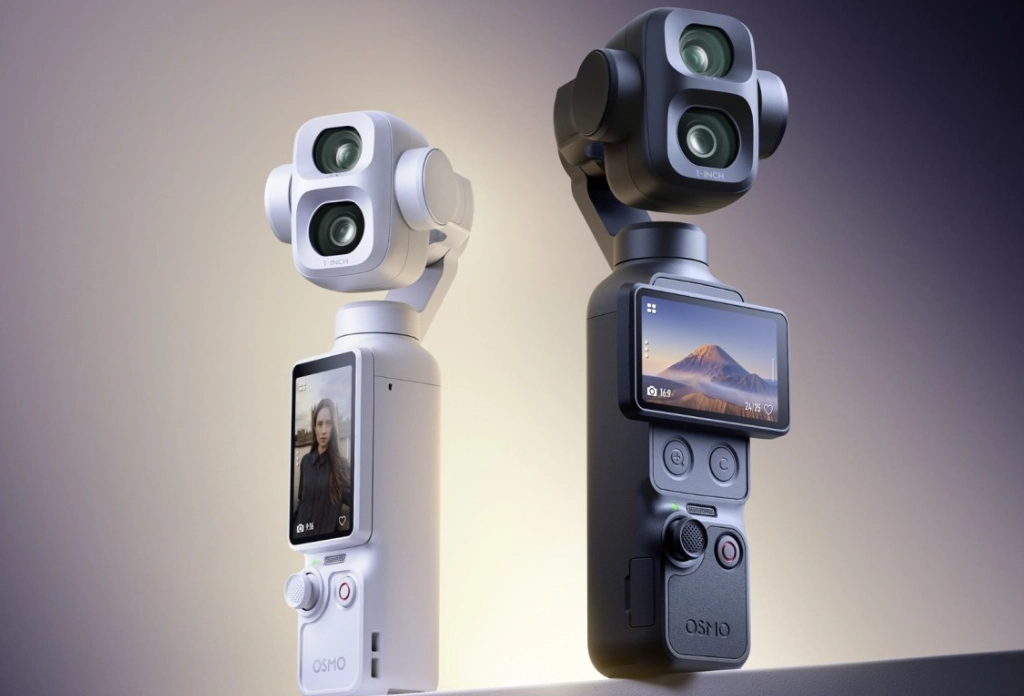

DJI Osmo Pocket 4P has finally been officially released in China — exactly one month after its first announcement at the Cannes Film Festival. The pocket gimbal camera is now available for pre-order at a starting price of 3,799 yuan, or about $530, for the standard kit. This is already the second dual-camera device in the Osmo Pocket lineup — and it arrives precisely at a time when DJI is suing its main competitor over patents for this very device format.
Main Specifications of DJI Osmo Pocket 4P
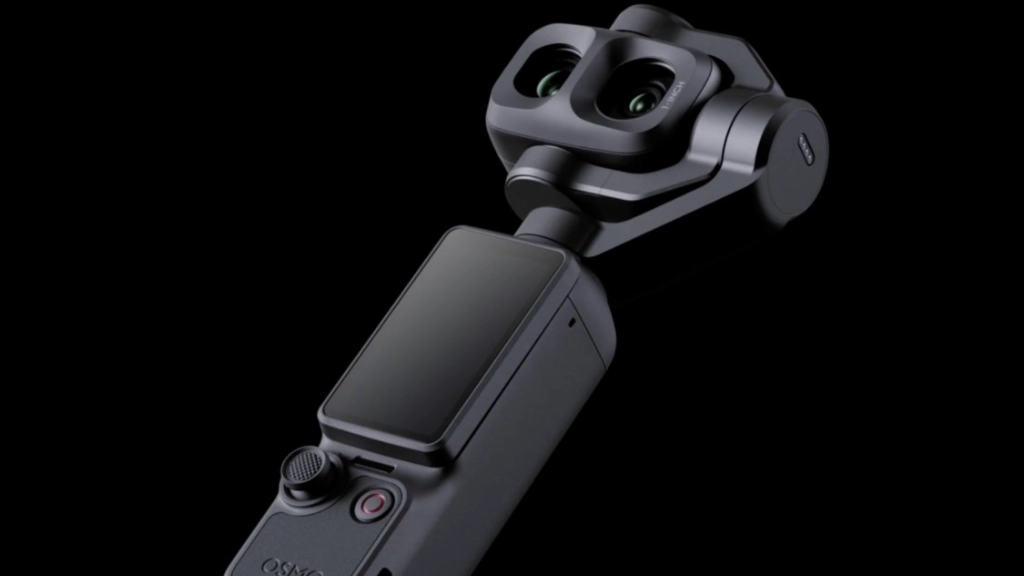
Osmo Pocket 4P received a major hardware leap compared with its predecessor. The key new feature is two separate cameras instead of one, each with its own sensor and purpose.
Main camera:
- Sensor: 1 inch with LOFIC technology (Lateral Overflow Integration Capacitor)
- Aperture: f/2.0
- Equivalent focal length: 20 mm (wide angle)
Telephoto camera:
- Sensor: 1/1.28 inch
- Aperture: f/1.8
- Equivalent focal length: 60 mm
- Optical zoom: native 3x, up to 12x digital
LOFIC technology in the main sensor is not just a marketing term. It makes it possible to expand the dynamic range of shooting, reducing blown-out highlights in bright areas of the frame without losing detail in shadows. For vloggers and independent filmmakers, whom this device is aimed at, this means a better image in difficult lighting — for example, shooting against the sun or in changing lighting conditions.
Video and Photo: What the Camera Can Do
Osmo Pocket 4P is primarily focused on video content, and its capabilities match a professional level for a device of this size.
Video Recording Capabilities
- Maximum resolution: 4K at 60 frames/sec
- Slow motion: up to 4K at 240 frames/sec
- Color bit depth: 10-bit with D-Log2 support
- Gimbal: 3-axis mechanical with intelligent subject tracking
D-Log2 support is an important detail for those who plan professional color grading in post-production. This is the same logarithmic color standard that DJI uses in its drones and Ronin cinema cameras, now available in a pocket format.
Photo Capabilities
For still images, Osmo Pocket 4P offers 37 MP resolution and support for Panorama mode. This is more than most flagship smartphones and is comparable to the level of compact mirrorless cameras.
Design, Screen and Battery Life
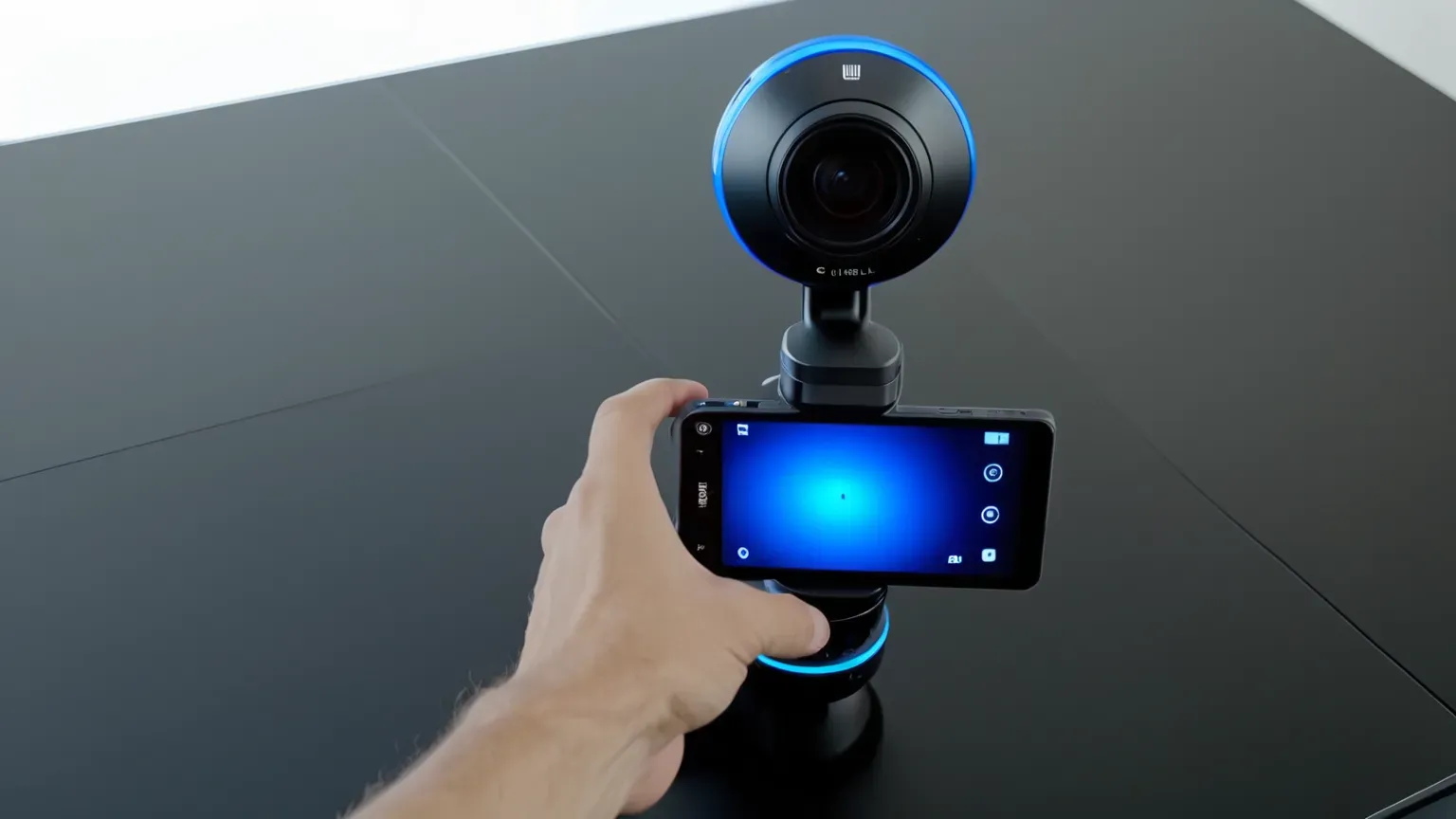
The pocket format of Osmo Pocket 4P keeps DJI’s signature design — a compact body with a rotating touchscreen.
Display:
- Size: 2 inches, rotating
- Brightness: up to 1000 nits peak brightness
Audio and storage:
- Microphones: 3 built-in microphones
- Internal storage: 103 GB
- Expansion: up to 1 TB via microSD
Weight and battery:
- Weight: 230 g
- Battery: 1545 mAh
- Fast charging: 0-80% in ~18 minutes, full charge in ~32 minutes
Connectivity:
- Dual-band Wi-Fi 6
- Bluetooth LE 5.4
The 1000-nit screen brightness is a significant detail for shooting outdoors in direct sunlight, where ordinary displays become practically unreadable.
DJI’s Legal War Against Insta360
The release of Osmo Pocket 4P is taking place against the backdrop of a fierce legal conflict that adds additional context to this news.
The main competitor of the new camera is the recently announced Insta360 Luna Ultra, another pocket gimbal camera with a dual lens. Both devices solve the same task for the same audience — and this is no coincidence.
DJI has already filed a lawsuit against Insta360, accusing the company of patent infringement due to the excessive similarity of the Luna Ultra to the Osmo Pocket 4P. Insta360 responded in kind and filed a countersuit concerning patents for gimbal stabilization and 360-degree shooting technologies.
This confrontation shows how competitive the segment of pocket cameras for content creators has become. Both companies are competing not only over functionality, but also over legal control of the very concept of a dual camera in a compact format.
Who This Camera Is For and Whether It Is Worth Buying
DJI Osmo Pocket 4P is aimed at a specific audience: independent filmmakers, vloggers and content creators who need professional image quality without the size of a large camera.
Advantages for this audience:
- Two lenses cover both wide shots and close-ups without changing equipment
- 10-bit color and D-Log2 provide a professional level of post-production
- The compact 230 g body lets you always keep the camera with you
- Fast charging minimizes waiting time between shoots
For an ordinary user who simply wants to shoot videos for social media without professional post-production, this level of functionality may be excessive — and the $530 price is also accordingly higher than basic action cameras.
In Brief: The Key Facts About DJI Osmo Pocket 4P
- DJI Osmo Pocket 4P was officially introduced on June 16, 2026, in China
- Price: from 3,799 yuan (~$530) for the standard kit
- Dual camera: 1″ LOFIC sensor (20 mm) + 1/1.28″ telephoto (60 mm, 3x optical zoom)
- Video: 4K 60fps, slow motion 4K 240fps, 10-bit D-Log2
- Photo: 37 MP, Panorama mode
- Display: 2″ rotating, up to 1000 nits
- Battery: 1545 mAh, 0-80% charge in 18 minutes
- Competitor: Insta360 Luna Ultra — a patent lawsuit is ongoing in parallel
FAQ
How much does DJI Osmo Pocket 4P cost? The starting price is 3,799 yuan, or about $530, for the standard kit in China. Prices for other markets have not yet been announced.
How is Osmo Pocket 4P different from its predecessor? The main difference is the dual camera: a main 1-inch LOFIC sensor and a separate telephoto camera with 3x optical zoom, while previous models had only one camera.
What is the main competitor to DJI Osmo Pocket 4P? Insta360 Luna Ultra — also a pocket camera with a dual lens. DJI and Insta360 are currently in court over the patent similarity of the devices.
The article was prepared by the TechVisor team — practical IT media for people.