New Siri artificial intelligence will become a reality in September 2026 — but the price of this step turned out to be unexpected. According to a report by The Information, Apple has struck a deal with Google and Nvidia to take its voice assistant to a new level. The company that spent 15 years building its reputation on absolute control over its own hardware and software is, for the first time, handing part of Siri request processing over to competitors’ infrastructure. This is not just a technical decision — it is a strategic admission.
What Apple Announced and When to Expect It
The new Siri is expected alongside iOS 27 in September 2026. The first major announcement of details will take place on June 8, 2026, at WWDC 2026 — Apple’s annual developer conference.
Key dates:
- June 8, 2026 — WWDC 2026: Apple will publicly show the new Siri
- September 2026 — release of iOS 27 with the new Siri on all compatible devices
- Fall 2026 — launch of the iPhone 18 Pro with the new assistant built in
This is the biggest change to Siri since its launch back in 2011 on the iPhone 4S.
Why Apple Turned to Google and Nvidia
To understand the scale of the decision, you need to know the background. For years, Apple developed its own cloud infrastructure — Private Cloud Compute — based on Apple Silicon chips from the Mac series. The system was announced as an answer to the privacy question: your data is processed on Apple’s servers, not someone else’s.
But when engineers tried to run large language models on Private Cloud Compute at the scale of Gemini, it turned out that the system worked too slowly. Trillion-parameter-class models require specialized AI-class hardware, which server-grade Apple Silicon chips simply are not.
At the same time, Siri had been lagging behind ChatGPT, Claude and Gemini for years — and this gap was becoming increasingly noticeable. Delays in Apple Intelligence features announced back at WWDC 2024 became one of the reasons that accelerated the CEO change: Tim Cook is stepping down in September, and this inability to catch up with competitors is part of the legacy that the new team is now fixing.
How the New Architecture Works: A Hybrid Processing Model
Instead of simply moving Siri to Google servers, Apple chose a much more elegant solution — a hybrid architecture where each request receives exactly as many resources as it needs. This solves the performance problem while keeping as much data as possible on the device.
Simple Request — On Device, Complex Request — In the Cloud
Apple is implementing a hybrid approach to Siri request processing:
- Simple and fast tasks (timer, call, reminder, search in apps) — processed on the device without going online
- Complex requests (document analysis, multi-step tasks, contextual questions) — routed to the Google cloud
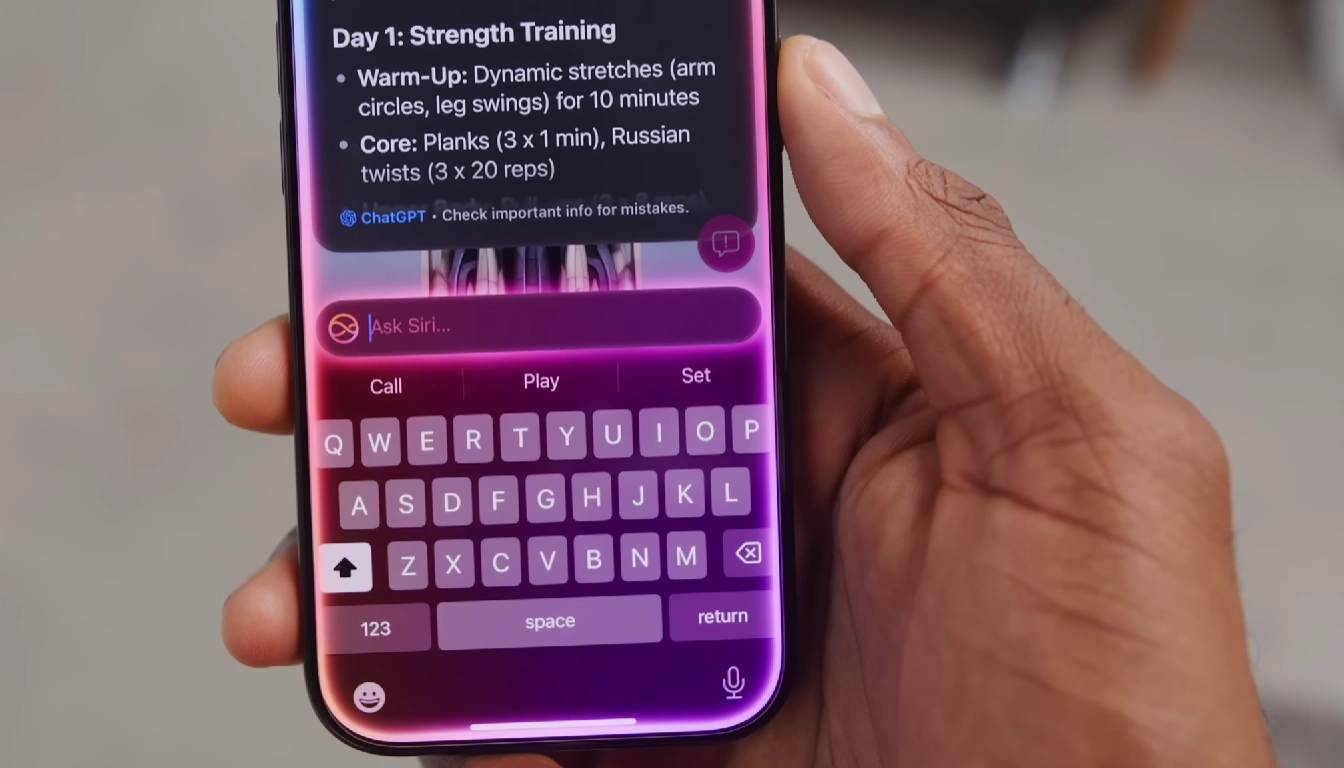
This is a logical solution: it preserves speed for everyday actions and provides power for complex ones. This is how, for example, ChatGPT works on iPhone — basic functions are built in, while heavy tasks go to OpenAI’s servers.
Gemini: $1 Billion a Year and 1.2 Trillion Parameters
According to The Information, Apple is paying Google about $1 billion a year for licensed access to a custom version of Gemini. This version of Gemini has around 1.2 trillion parameters — an ultra-large-scale model that matches the most powerful systems available today.
The very fact that payment is happening on this scale is telling. This is not a minor deal, but a strategic partnership that Google and Apple confirmed in a joint statement earlier this year: “The next generation of Apple Foundation Models will be built on Google’s Gemini technologies.”
Nvidia Blackwell B200: Chips That Encrypt Data Right During Processing
The Google cloud infrastructure that Apple will use is built on Nvidia Blackwell B200 — the most powerful GPUs for AI tasks, which replaced the Hopper architecture in 2024. Blackwell B200 is designed to work with trillion-parameter models and provides a significant increase in speed and memory compared with the previous generation.
But the key detail is not the power itself, but Nvidia’s Confidential Computing technology. It encrypts data directly on the chip at the moment of processing — meaning that even if someone gains access to the physical server, it will be impossible to read your request. Nvidia describes it this way: it “preserves the confidentiality and integrity of AI models, allowing workloads to run securely even in shared cloud environments.”
This is exactly what allows Apple to claim that privacy is preserved — even when the request is processed neither on the device nor on Apple’s servers.
What Will Change in Siri: New Capabilities
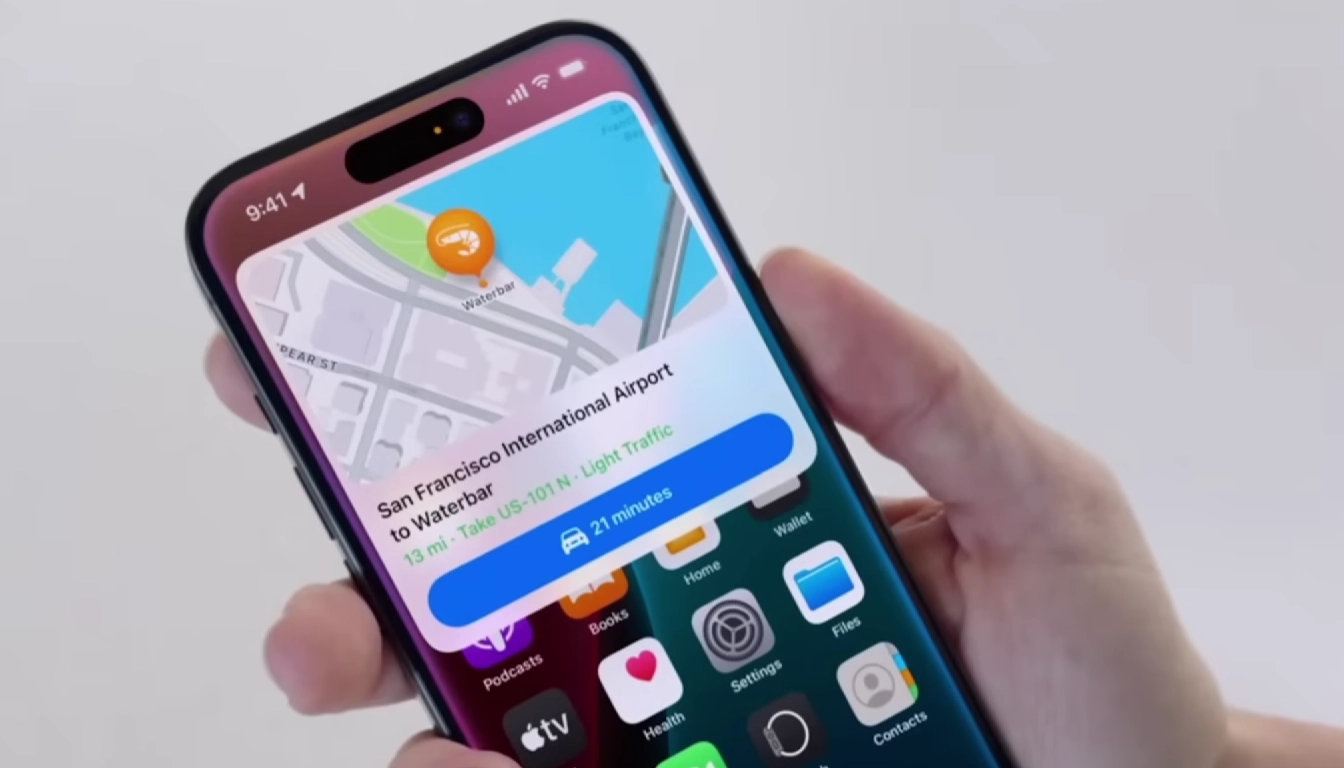
In short, almost everything is changing. Siri stops being a set of separate commands and becomes a single AI agent that understands the context of your life and is able to act, not just respond. Here are the specific new capabilities expected in iOS 27.
From Voice Assistant to AI Agent
The new Siri is no longer the assistant that set timers and checked the weather. According to sources, it is a full-fledged AI agent capable of:
- Contextual understanding — Siri will read everything displayed on the screen and respond according to the context
- Personal memory — the assistant will have access to data from Mail, Messages, Calendar, Photos and Notes
- Multi-step actions — write and send an email, edit a document, schedule a meeting as one command
- A separate chatbot app — Siri will be released as a standalone app alongside the built-in assistant
- Lives in Dynamic Island — on the iPhone 18 Pro, the new Siri will be visually integrated into a smaller Dynamic Island
What Is Still Missing
An important nuance: Apple has not yet officially shown the new Siri publicly. All the details come from The Information’s report and previous leaks. WWDC on June 8 will be the first official announcement where it will become clear what will actually be in iOS 27 in September.
What “Privacy” Means in the New Scheme
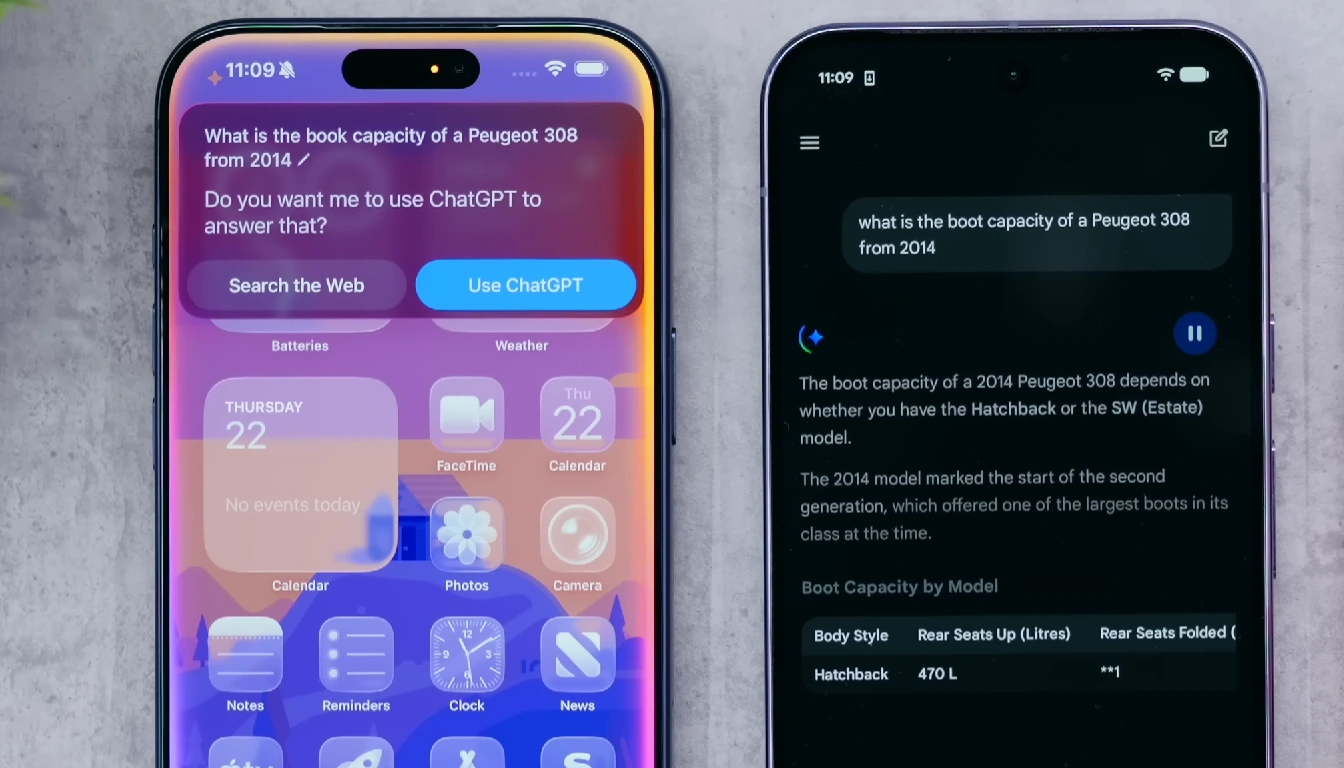
This question naturally arises for everyone: if my Siri request goes to Google’s servers — where is Apple privacy in that?
Apple answers this through three layers of protection:
- Data minimization — only the specific request is sent to the cloud, without linking it to an Apple ID or other identifying information
- Encryption during processing — Nvidia Confidential Computing encrypts data directly on the chip, protecting it even from data center operators
- Preserving the PCC brand — according to MacRumors, Apple will keep the name “Private Cloud Compute” even when moving to Google infrastructure
Will this satisfy critics? Hardly all of them. But technically, Confidential Computing is a real protection mechanism, not a marketing promise.
Context: Why This Is So Important for Apple
The company that built a $3 trillion capitalization on the principle of “we do everything ourselves” is, for the first time, acknowledging that its own resources are not enough in the AI model race. This is not weakness — it is pragmatism.
According to estimates, in 2025 Apple purchased around 250 Nvidia NVL72 servers at about $4 million each — and even that turned out to be too little for working with Gemini-scale models. Google, meanwhile, has thousands of such servers in its cloud infrastructure.
The AI performance race is primarily an infrastructure race. And here, even Apple is playing by the rules of a market where Nvidia has won.
In Brief: The Key Facts About the New Siri Artificial Intelligence
- The new Siri artificial intelligence launches in September 2026 alongside iOS 27
- First public announcement — WWDC 2026, June 8
- Architecture: hybrid — simple requests on device, complex ones through Google Cloud
- Model: custom Gemini from Google, ~1.2 trillion parameters, Apple pays ~$1 billion/year
- Hardware: Nvidia Blackwell B200 GPU with Confidential Computing (encryption during processing)
- New features: context from Mail/Messages/Calendar/Photos, multi-step actions, separate chat app
- Privacy: data is encrypted on the chip and not linked to Apple ID
- Why this approach: Private Cloud Compute turned out to be too slow for trillion-parameter models
FAQ
When will the new Siri be released? The new Siri is expected in September 2026 alongside iOS 27. A detailed announcement will take place at WWDC 2026 on June 8.
Why is Apple using Google Gemini for Siri? Apple’s own cloud system, Private Cloud Compute, turned out to be too slow for large AI models. Google Cloud with Nvidia Blackwell B200 provides the required performance.
Is it safe to send Siri requests through Google? Apple uses Nvidia Confidential Computing technology, which encrypts data directly on the chip during processing. Requests are not linked to Apple ID.
How much is Apple paying Google for Gemini? According to The Information, Apple is paying about $1 billion a year for licensed access to a custom version of Gemini with ~1.2 trillion parameters.
The article was prepared by the TechVisor team — practical IT media for people.